Short overview: In this article you will learn why the Full Frame Documentary Film Festival, the International Documentary Film Festival Amsterdam (IDFA) and the Hot Docs Canadian International Documentary Festival are among the most important destinations for documentary filmmakers. You will get to know the history and competition structures of these festivals, understand the submission requirements and receive valuable tips on how to strategically plan and submit your project.
Documentary films are mirrors of reality. “Documentary film shows the world as it is, in all its wonder and all its rawness,” the German filmmaker Werner Herzog once said. This quote perfectly sums up the fascination with the genre. Thanks to modern technology, more people than ever can tell stories that are uncomfortable, moving or inspiring. For these stories to find their audience, festivals are needed that present, discuss and honour documentary films. Three of these events are considered particularly influential: the Full Frame Documentary Film Festival in North Carolina, the International Documentary Film Festival Amsterdam (IDFA) and the Hot Docs Canadian International Documentary Festival in Toronto. In what follows you will learn more about their history, their significance, the rules for submission and what filmmakers should look out for. Afterwards we provide practical tips on how to successfully place your work at festivals, and explain how to license images with IMAGO in a legally compliant manner.
Full Frame Documentary Film Festival – U.S. cultural forge for non‑fiction
A platform with an international reputation
The Full Frame Documentary Film Festival has been held since 1998 in the historic centre of Durham, North Carolina. It was founded by Nancy Buirski under the name “Double Take Documentary Film Festival” and quickly developed into a renowned platform for non‑fiction filmmakers. The guest list reads like a who’s who of American cinema: among the numerous well‑known participants were Martin Scorsese and Michael Moore. The festival has specialised in character‑based narratives that offer intimate, often bold insights and encourage discourse between audiences, filmmakers and industry representatives. The local setting makes the event special: the film screenings take place in historic buildings, there is also an open‑air cinema, and there are numerous discussion panels and workshops. The organisation is supported by Duke University, which, with programmes such as “Teach the Teachers” and the “Full Frame Fellows” programme, promotes emerging filmmakers and thus inspires the next generation of storytellers. The festival attracts thousands of visitors each year, including school pupils, students, industry representatives and film‑enthusiast travellers. In addition to artistic exchange, the event generates around two million dollars in revenue for local businesses, according to Duke Arts.
Categories, competitions and awards
Full Frame presents both short and feature‑length documentaries. The programme is divided into two main sections: NEW DOCS, the official competition series, and Invited Program, the selection curated by the festival team. There are several prizes for NEW DOCS, such as the Grand Jury Award, the Full Frame Jury Award for Short, the Charles E. Guggenheim Emerging Artist Award and the Audience Award. Participation is worthwhile not only because of the prestige; the winning film of the short film competition qualifies for the Academy Awards.
Submission conditions and deadlines
To be considered for the Full Frame Documentary Film Festival, films must have been completed after 1 January 2025. Works with a running time of up to 40 minutes are considered short films; all films from 41 minutes are considered feature‑length. Films with a running time of more than 180 minutes are rejected. The festival charges staggered fees: the Early‑Bird deadline ends on 31 August, the Regular deadline on 30 September and the Late deadline on 15 November. The fees vary depending on length and range from 45 U.S. dollars (early bird) to 85 U.S. dollars for feature films. There are reduced rates for students. Important: Full Frame has no formal premiere requirements, but films that have not yet been shown at major festivals or are available online are given priority. Filmmakers must provide a screener, complete an online form and submit all required materials on time. Notification of selection usually takes place in the spring of the festival year.
Why Full Frame?
Full Frame is considered “the filmmaker’s festival”. The relaxed atmosphere leaves room for conversations, and the selection is guided by quality and innovation. There are panels on topics such as ethics in documentary film, music rights and financing. The festival receives special attention for its commitment to education: workshops convey film language, and the “Full Frame Road Show” presents selected films free of charge throughout the year in the region. For filmmakers from Germany or Europe, participation can also serve as a strategic step: the festival is regarded in the U.S. industry as a springboard, and an award or mention in Durham increases visibility among important decision‑makers.
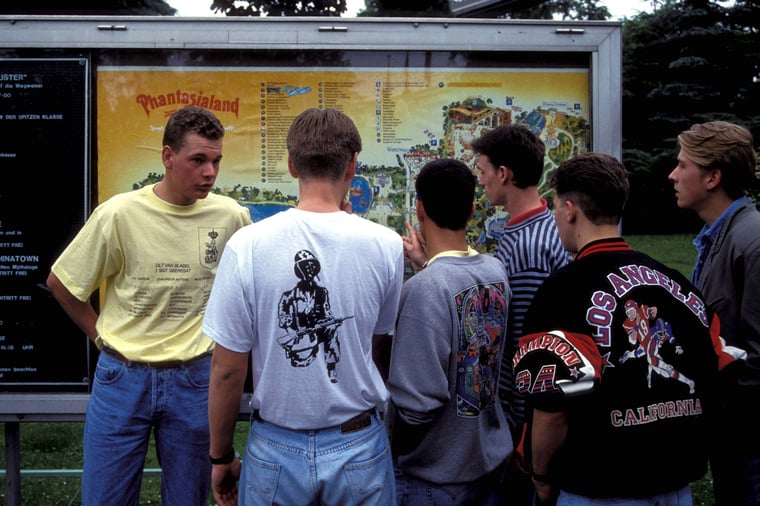 IMAGO / Werner Schulze I Teenagers planning their route through a theme park.
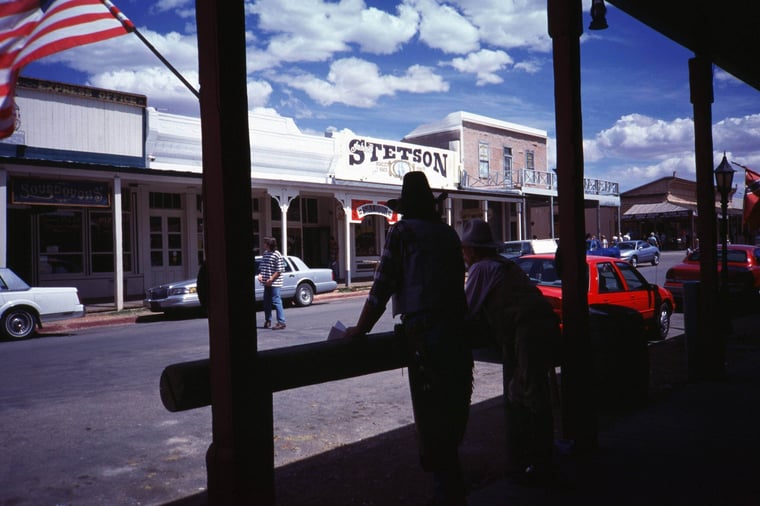 IMAGO / Brigani-Art / Work Heinri I Trip Tombstone Nickname The Town Too Tough To Die.
 IMAGO / GRANGER Historical Picture Archive I JAPAN: LAND RECLAMATION. A young settler family in their new home on the island of Hokkaido.
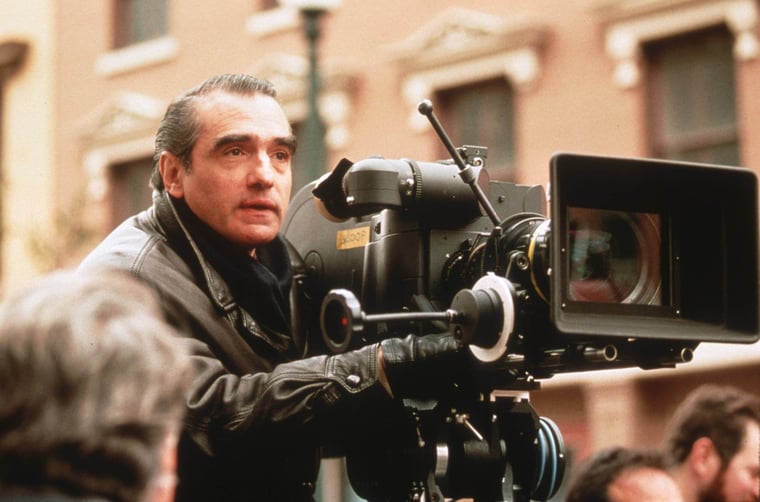 IMAGO / teutopress I Time of Innocence Martin Scorsese 11 93.
 IMAGO / ABACAPRESS / Atlanta Journal-Constitution TNS I Scottie Scheffler hits from the bunker on the 15th hole during the final round of the 2024 Masters Tournament at Augusta National Golf Club.
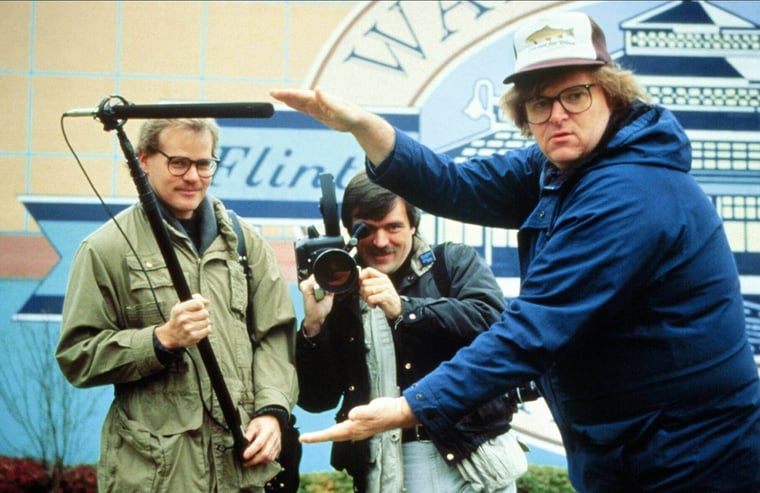 IMAGO / ALLstar / Mary Evans AF Archive Warner Bros I Michael Moore Film: Roger And Me (1989) Director Michael Moore 09 September 1989.
International Documentary Film Festival Amsterdam (IDFA) – Europe’s creative hotspot
History and significance
The International Documentary Film Festival Amsterdam (IDFA) was founded in 1988 by Ally Derks and has grown into the world’s largest documentary film festival. Each year, more than 250 films are presented in Amsterdam and 295 000 visitors are welcomed, including around 3 000 industry professionals and 40 000 students. With its focus on creative documentaries, hybrid narrative forms and innovative media projects, IDFA is a trendsetter. The festival management invites both established filmmakers and debutants and shows works from all regions of the world. In addition to film screenings, there is the DocLab section for immersive media and digital art as well as the IDFA Forum as a market for co‑productions and financing.
Competitions, sections and awards
IDFA is divided into numerous competitions and programmes. The most important sections include:
-
Feature‑Length Competition (feature film competition): For films of 70 minutes or longer. Prize money is awarded for the best film and best direction.
-
First Appearance Competition: Debut films are shown here; a prize honours the best first work.
-
Mid‑Length Competition: For films between 40 and 70 minutes in length.
-
Dutch Competition: Competition series for Dutch productions or co‑productions.
-
Student Competition: Presents graduation films from international film schools.
-
DocLab Competition: For interactive or immersive projects, virtual‑reality experiences and digital storytelling.
In addition there are non‑competitive sections such as Best of Fests, Masters or Panorama, which show highlights of the international festival season. The spectrum of awards is extensive and includes the prize for the best feature‑length film, special jury prizes, audience prizes, the FIPRESCI prize from the international film critics and many more.
Submission rules and deadlines
The rules of IDFA are complex but transparent. The festival accepts documentary films of any length as well as performances and new‑media projects. It is important that the films were completed after 10 July 2025. Films created before this date are rejected or must qualify for future editions. For the 2026 application round, staggered deadlines apply: an Early Deadline in April, a Second Deadline in May and a Final Deadline in July, each with increasing processing fees. The fees vary depending on the length of the film between €25 and €85. Students and up‑and‑coming filmmakers often receive reduced rates.
IDFA places great importance on premiere status. For the competitions, the festival generally only accepts world, international or European premieres. Films that have already been shown at festivals or distributed online have lower chances; some sections even explicitly require a world premiere. Works that have been broadcast on Dutch television or are available online in the Netherlands are excluded. For the submission process, an online form must be completed, a screener copy uploaded and the fee paid. An additional option is the IDFA DocLab Forum for digital projects, which has separate requirements.
What makes IDFA unique
During the festival, Amsterdam becomes a meeting point for filmmakers, programmers and journalists from all over the world. The programme design is curatorially demanding: the festival shows experimental, essayistic and activist works that blur the boundaries between reality and art. Besides film art, the industry event IDFA Forum for projects in development is highly valued: producers can present their ideas there, secure potential co‑financing and network. Attending an IDFA screening often also means taking part in subsequent Q&A sessions in which directors present their perspectives. In addition, masterclasses and talks with personalities such as Laura Poitras or Errol Morris provide valuable insights into the contemporary non‑fiction scene.
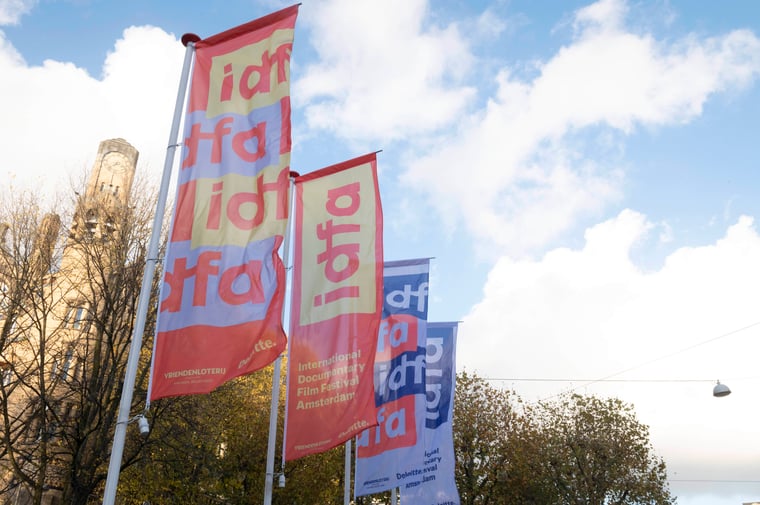 IMAGO / Richard Wareham | Banners for the International Documentary Film Festival IDFA.
 IMAGO / Pond5 Images | People in the cinema before watching a movie.
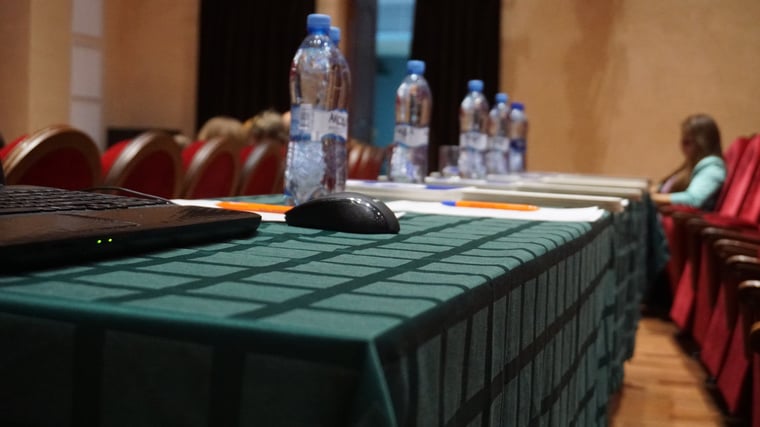 IMAGO / Pond5 Images | Tables of the referees during the International Documentary Film Festival IDFA.
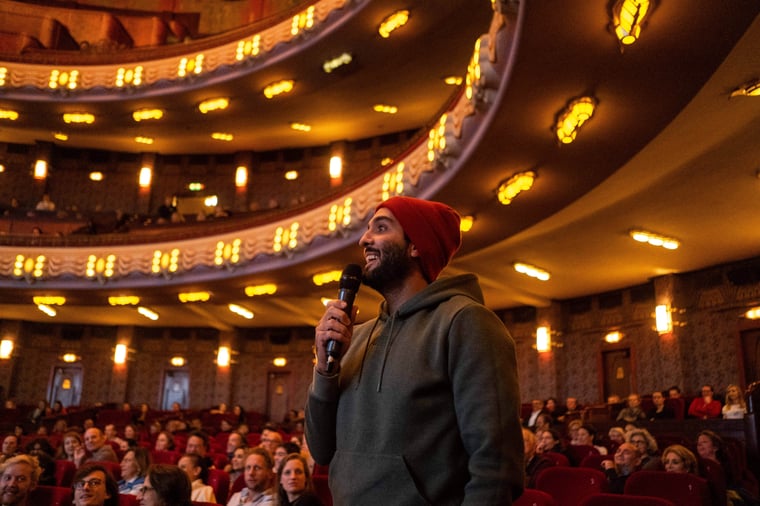 IMAGO / Martin Bertrand | RED CARPET Opening night of Tapis Rouge, the French Film Festival in Amsterdam.
Hot Docs Canadian International Documentary Festival – North America’s largest documentary film marketplace
Origins and mission
Hot Docs was founded in 1993 by the Canadian Independent Film Caucus, a predecessor of today’s Documentary Organization of Canada. Since 1996, Hot Docs has operated as an independent non-profit organization. The festival in Toronto presents more than 200 cutting-edge documentary films from around the world each year. With attendance figures exceeding 200,000, Hot Docs is considered the largest documentary film festival in North America. In addition to the festival, Hot Docs runs year-round educational programs and the Hot Docs Ted Rogers Cinema, a major cinema hotspot in Toronto.
Program sections and awards
Hot Docs is divided into several program sections:
-
Canadian Spectrum: Competition for Canadian productions; the “Best Canadian Feature Documentary” award is presented.
-
International Spectrum: International competition for feature-length films, awarding the “Best International Feature Documentary.”
-
Mid-Length Competition: For films between 40 and 65 minutes, with an award for the best mid-length film.
-
Short Competition: For films up to 40 minutes; the winner qualifies for the Oscars.
-
Special Presentations: Highlights of international documentary cinema outside of competition.
-
Market & Hot Docs Forum: A pitch event where producers and financiers meet.
Additional awards include the Audience Award, the DGC Special Jury Prize, and the Emerging Canadian Filmmaker Award. For independent filmmakers, Hot Docs is particularly attractive because the festival actively promotes gender parity and diversity: it offers mentorship programs, networking events, and funding initiatives for women and underrepresented voices.
Submission criteria and deadlines
The festival’s rules are clearly defined. Films completed after January 1, 2025 are eligible. Feature-length films (66 minutes or more) and mid-length films (41–65 minutes) must have at least their Ontario premiere — meaning they must not have been publicly shown in the Canadian province of Ontario prior to the festival. Short films (up to 40 minutes) must be Toronto premieres, but may have been screened in other provinces. Important: feature-length and mid-length films, as well as episodes of series, must not be available online in Ontario. Submissions must be in English or include English subtitles. Films that have already been submitted in previous years as a rough cut are not eligible for resubmission.
The submission deadlines are staggered: an Early Deadline at the end of October, a Regular Deadline in early December, and a Late Deadline in early January. Fees vary depending on film length and submission timing: for feature films, they are 70 USD (Early), 120 USD (Regular), and 165 USD (Late), plus 13% tax. Short films pay lower fees (35/50/70 USD). Hot Docs notifies participants of selections in the spring and provides specific guidance for preparing screening copies.
Why Hot Docs?
Hot Docs is more than just a festival — it is a platform for distribution and financing. The Hot Docs Forum is one of the most important co-production and pitch markets in the world. Numerous projects presented there have gone on to achieve international success. For German-speaking filmmakers, participation can be highly valuable in building connections in North America and securing potential distribution or broadcasting deals. In addition, the festival offers an extensive educational program that includes workshops, panels, and masterclasses. Particularly noteworthy is its support for female and non-binary filmmakers as well as underrepresented groups — offering an opportunity to make diversity visible and to build supportive networks.
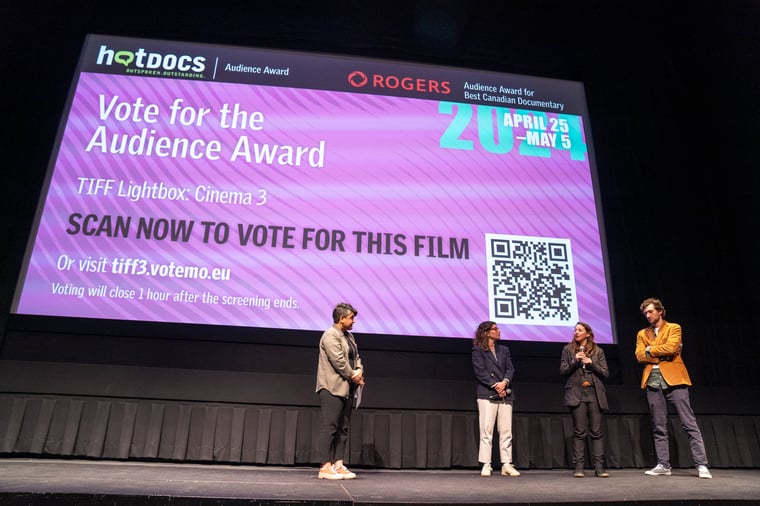 IMAGO / SOPA Images I People on the stage at the Hot Docs Film Festival 2024 in Toronto.
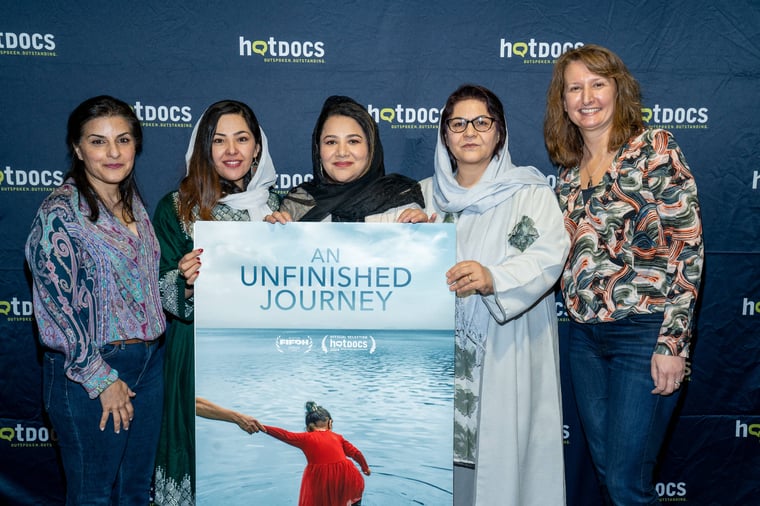 IMAGO / SOPA Images / Shawn Goldberg I Hot Docs Film Festival in Toronto, Canada, April 2024.
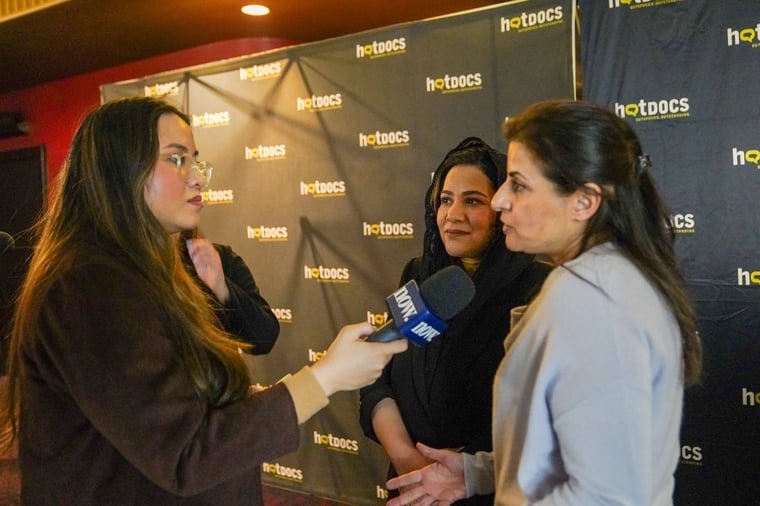 IMAGO / SOPA Images / Shawn Goldberg I Hot Docs Festival Press Conference in Toronto, Canada.
Other important documentary film festivals in Germany and Europe
Even though this article focuses on Full Frame, IDFA, and Hot Docs, it is worth taking a look at other significant festivals that can serve as a springboard.
-
DOK Leipzig (Germany): This festival, founded in 1955, is one of the oldest documentary film festivals in the world. The 2026 edition will take place at the end of October, with the submission period running from February 10 to July 1, 2026. Eligible entries include creative documentary films and animated films, XR works, as well as co-production projects, provided they were produced in 2025 or 2026. Many categories require world or international premieres; winners may qualify for the Academy Awards.
-
DOK.fest München (Germany): This festival focuses on international documentary films of 52 minutes or longer and has a strong industry platform. It offers the DOK Market for distribution and co-production. Submissions must be world premieres or at least German premieres.
-
Sheffield Doc/Fest (United Kingdom): A festival with a strong focus on innovative storytelling and digital media. It offers an extensive pitch forum and programs for emerging filmmakers.
-
Visions du Réel (Switzerland): Known for artistically ambitious documentary films and hybrid forms. The festival is an ideal venue for European premieres.
These events provide additional platforms for filmmakers who want to position their projects internationally. A strategic festival plan considers both the “big three” and regional or thematic festivals in order to reach different target audiences.
Strategies for a successful festival submission
Participating in one of the leading documentary film festivals is a goal for many filmmakers. However, only a few succeed. The key to success lies in a well-thought-out strategy and a professional presentation of your film. The following tips are based on recommendations from experienced festival consultants and industry experts.
1 – Develop a festival strategy early
Plan early which festival offers the best stage for your project. Define your goal: do you want international recognition, to gain distribution partners, to secure prize money, or to access networking events? A good approach is to start with prestigious festivals such as IDFA or Hot Docs as a world premiere and then use regional festivals to gain visibility in different markets. Also consider smaller festivals with a thematic focus (e.g., environment, human rights) if they better suit your film.
2 – Research the orientation of festivals
Not every festival is suitable for every film. Learn about the programs, jury composition, and preferences of each event. Read interviews with programmers, watch films from previous years, and analyze which themes and styles were successful. This increases the likelihood that your work will fit into the program. The article by Doc Film Academy recommends not being dazzled by glamorous names, but instead targeting festivals that support your film’s genre, length, and message.
3 – Put together a professional submission package
Your film is the centerpiece, but a strong dossier can make the decisive difference. Polish the edit and ensure clean sound and color grading. Write a compelling synopsis that clearly outlines the plot and highlights what makes your project unique. A personalized filmmaker biography and a “director’s statement” should explain your background, motivation, and vision. Include posters, stills, and a trailer, as visual materials make it easier for the selection committee to assess your work. Strictly follow the festival’s format requirements (length, file size, subtitles) so that your submission does not fail for formal reasons.
4 – Network and be present
Festivals such as IDFA or Hot Docs are industry events. If you have the opportunity to attend a festival as a visitor before submitting, take advantage of it. Attend screenings, participate in Q&A sessions, and speak with other filmmakers and programmers. Many successful projects owe their selection to personal contact: introducing your project in advance and asking for feedback can increase your chances. However, keep in mind that programmers do not want to watch private screenings in hotel rooms — keep your networking professional. The aforementioned guide emphasizes that proactive communication, attending industry events, and engaging with the community are key factors.
5 – Manage timing and deadlines
Most festivals have multiple submission deadlines. Early submissions cost less and demonstrate good organization. However, do not submit your film too early if it is not yet polished — “work in progress” is only accepted if the festival explicitly allows rough cuts. On the other hand, do not wait until the last minute, as technical issues can arise. Keep in mind that you must plan multiple festivals in a logical sequence: if your film has its world premiere at Full Frame, you may no longer be able to submit it to IDFA, which often requires world or European premieres. Therefore, develop a realistic timeline and use calendars to keep track of deadlines, fees, and screening dates.
6 – Dealing with rejections and feedback
Even outstanding films are sometimes rejected. Understand that many factors play a role: program slots are limited, and festivals curate thematically balanced lineups. Do not take rejections personally. If possible, ask for feedback from programmers or other professionals. Your next submission will benefit from the insights you gain. At the same time, look for alternative platforms such as online festivals or broadcasters that acquire documentary films.
Licensing images — a guide for documentary filmmakers
Documentary films rely on images — whether interviews, archival footage, or photographs. Anyone who publishes images operates in a legally sensitive environment. A license does not transfer ownership of the image, but regulates the right of use, while copyright remains with the photographer or the agency. For positioning and promoting your film, high-quality press images are essential, and choosing a reputable provider is crucial. IMAGO offers a large archive of current and historical images that you can use safely.
Ways to purchase images at IMAGO
IMAGO facilitates the acquisition of image licenses through several purchasing options:
-
Webshop – Single License: The fastest way to license individual images for specific publications. Ideal for small projects or one-time uses.
-
Webshop – Credit Packages: You purchase a package of credits valid for 365 days. Credits allow access to multiple images and can save up to 50 percent. This option is suitable for regular publications and projects.
-
Sales Manager: For larger projects, recurring needs, or custom contract models, a personal sales manager is available to create tailored offers and assist with complex licensing requirements.
Practical tips for handling image rights
-
Careful research: Pay attention to labels such as “editorial use only” or “rights managed” and check the release status in the image metadata.
-
Define the purpose of use: Clarify before purchasing whether the image will be used editorially or commercially. This helps you choose the appropriate licensing model.
-
Plan long-term: If you need images regularly, you can save costs in the long run with credit packages or a customized agreement via a sales manager.
-
Document your licensing: Keep contracts and receipts carefully so that you can prove your rights of use if necessary.
Shaping your path to festival success strategically
Documentary film festivals are showcases for stories that can change the way we see the world. The Full Frame Documentary Film Festival, the International Documentary Film Festival Amsterdam, and the Hot Docs Canadian International Documentary Festival are among the most important platforms in the field. They are characterized by high artistic standards, internationally recognized programs, and strong industry networking. To ensure your submission is successful, you must understand the specific requirements of each festival, meet deadlines, and plan strategically. A solid festival strategy, professional materials, effective networking, and persistence significantly increase your chances. Do not forget to clarify the rights to all images used: IMAGO offers an extensive, legally secure image archive and flexible licensing models so that you can present your project professionally. With thorough preparation and a passion for the genre, nothing stands in the way of your festival success.


