

Anyone searching for a German actors list in a professional context usually does not mean a simple alphabetical collection of names. What they usually mean is a reliable selection of faces that can carry a topic, visually sharpen a dossier, or immediately elevate an image feature. For editorial teams, production companies, publishers, agencies, and brands, that is a decisive difference. In day-to-day media work, there is a great deal of distance between “well-known” and “usable.”
That is exactly where the real value of a strong list begins. It must show not only who matters, but also why. Which actors and actresses stand for film history? Which names work in current festival or streaming contexts? Which faces immediately evoke associations with German auteur cinema, mainstream productions, contemporary history, or international co-productions? And which motifs work as strong film star photos for headers, magazine openers, culture pages, social snippets, documentary visuals, or campaign material?
This article is therefore deliberately curated. It does not claim to be exhaustive, but instead provides a working foundation for media projects. If you are searching for queries such as “well-known actors in Germany”, you will find not just names here, but an assessment based on practical value: archival depth, relevance, thematic fit, visual language, and rights context.
Why a German actors list for media projects needs to do more than collect names
In professional use, an actors list is always also a research tool. It helps structure subject areas, set up image research more quickly, and define priorities. A strong selection saves time because it does not stop at the question “Who is famous?” but moves directly to “Which face fits which story?”
This is especially important when working under time pressure. A culture desk needs different names than a documentary production. A social media editorial team looks for different visuals than a print magazine. A communications department may lean more heavily toward timeliness and public recognition, while a documentary context may prioritize archival value, historical framing, and iconic image history. That is why the best German actors list is always context-specific.
There is also a second point that is often underestimated: not every prominent person automatically delivers strong image features. Some stars work exceptionally well in close-up portraits, but less so in historical retrospectives. Others have enormous archival depth and appear across decades in premieres, festivals, set photography, award ceremonies, political moments, or editorial portraits. That breadth is exactly what makes a face especially valuable for media projects.
So if you are truly working with a selection of well-known actors from Germany, you should not focus only on popularity, but on usability. That may sound matter-of-fact, but in the end it is deeply editorial. Good image selection is never decoration. It is part of the storytelling.
Well-known actors from Germany: How to choose based on format and target audience
-
Recognition. A well-known face has to work in a fraction of a second. On homepages, in social feeds, or on feature pages, instant readability matters. Names like Marlene Dietrich, Sandra Hüller, or Daniel Brühl already carry weight even in thumbnail format.
-
Thematic fit. The best choice for a media project is not necessarily the most famous one. For a dossier on New German Cinema, Hanna Schygulla is more relevant than a current box-office star. For a piece on contemporary cinema or festival momentum, Sandra Hüller may be more important than a mainstream face with stronger tabloid presence.
-
Archival depth. Some actors and actresses have only a few strong public image phases. Others offer decades of visual development: early career, international breakthroughs, award appearances, political moments, later roles, and retrospective coverage. For long-form pieces, documentaries, anniversaries, or obituaries, that is invaluable.
-
Visual language. Not every image tells the same story. A controlled studio portrait works differently from an emotional festival photograph, and a set still works differently from a paparazzi moment. Anyone choosing film star photos should know in advance whether authority, warmth, glamour, seriousness, or cultural relevance is meant to take center stage.
-
Rights clarity. Especially with prominent public figures, image selection should never be separated from the intended use. Editorial use, campaign placement, packaging, merchandising, or sponsorship all belong to different worlds. At that point, a list of names becomes a professional workflow.
German actors list: Archival icons of German cinema
Marlene Dietrich
No serious German actors list can do without Marlene Dietrich. The Berlin-born actress became an international star with The Blue Angel and remains one of the most glamorous figures in film history to this day. For media projects, she is much more than a film legend. She is a visual shorthand for Weimar modernity, exile, style history, stage presence, and transatlantic pop culture. Anyone telling stories about fashion, iconography, gender imagery, Berlin, or the 20th century will find in Dietrich a face charged with immediate historical meaning.
From an image perspective, Dietrich is especially valuable because her career can be represented through several visual registers: early film years, classic Hollywood staging, stage moments, portraits with tightly controlled lighting, and later a nearly sculptural self-staging as myth. For culture editors, that is ideal, because her images allow them to tell not just biography, but aesthetics as well.
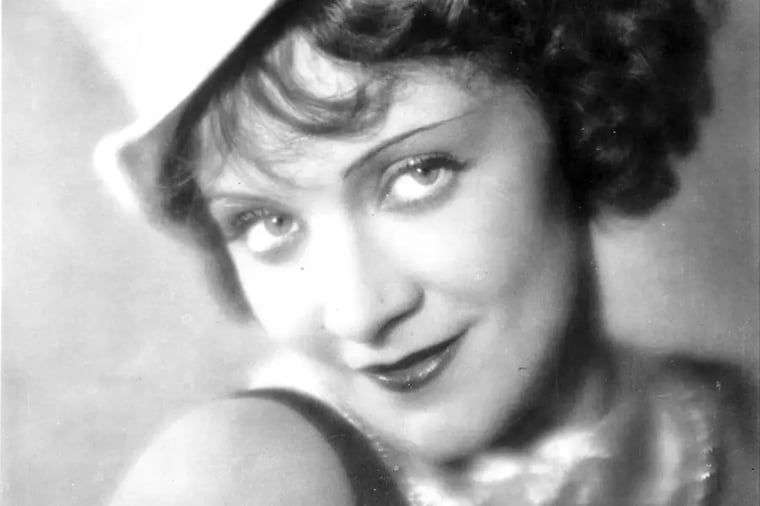 IMAGO / Globe Entertainment / Movie Star News / Marlene Dietrich 1930.
Hanna Schygulla
Hanna Schygulla stands for German auteur cinema like few other actresses. The Berlinale honored her with the Honorary Golden Bear, and the German Film Award presented her with the honorary prize in 2024 for her outstanding contribution to German film. That double recognition makes it clear how strongly her name is associated with film art, Fassbinder, European auteur cinema, and intellectual screen presence.
For media projects, Schygulla is especially strong when a subject needs depth. She works in retrospectives on New German Cinema, essays on European film history, anniversary pieces, festival coverage, and cultural-political contexts. Her film star photos rarely convey glamour alone. They communicate attitude, era, and authorship. That is exactly why they often feel more lasting than louder celebrity imagery.
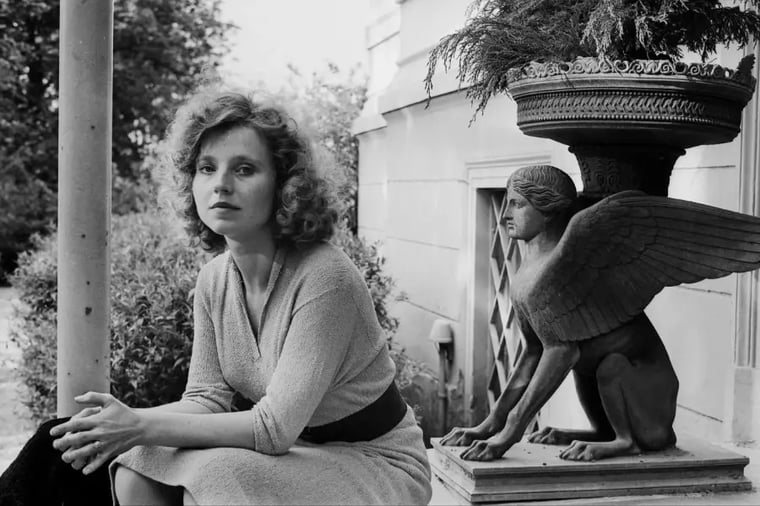 IMAGO / United Archives / Kindermann / Hanna Schygulla in front of the entrance to a villa, 1976.
Armin Mueller-Stahl
Armin Mueller-Stahl brings together something rare in German cinema: East German film and theater experience, international character roles, and recognition in Hollywood. His Oscar nomination for Shine and the Honorary Golden Bear for his lifetime achievement make him a key figure whenever a media project wants to build bridges — between German history, the craft of acting, and international reception.
Visually, Mueller-Stahl is so compelling because his images are never merely star images. They often feel like character studies. For documentaries about German division, acting schools, the aging of major performers, or German presence in international cinema, he is a highly functional face. He conveys seriousness, but never rigidity.
 IMAGO / Oliver Langel / Actor Armin Mueller-Stahl at the opening of his painting exhibition Menschenbilder in 2019.
Martina Gedeck
Martina Gedeck is one of those faces that conveys seriousness and emotional complexity at the same time. She is closely linked to films such as The Lives of Others and Bella Martha; The Lives of Others won the Academy Award for Best Foreign Language Film in 2007. That firmly ties Gedeck to a work that, in international perception, still functions as a reference point for political German cinema.
For editorial teams and producers, that is highly relevant. Gedeck is ideal for stories about surveillance, memory, moral ambiguity, literary adaptations, and European drama. Her images are rarely loud, but almost always narratively strong. Anyone looking for well-known actresses from Germany with an intellectual profile will almost inevitably arrive at her.
 IMAGO / Eventpress / Kochan / Martina Gedeck and Markus Imboden at the German Film Award 2025 at Theater am Potsdamer Platz on May 9, 2025, in Berlin.
German actors list: International faces with strong media impact
Daniel Brühl
Daniel Brühl is a prime example of how a German actor can be both nationally defining and internationally accessible. His breakthrough with Good Bye, Lenin! and his recognition by the European Film Academy still stand as symbols of a face that represents German contemporary history, European storytelling, and international mobility all at once.
If you are planning a dossier on reunification in cinema, German success stories in Europe, or stars with multilingual presence, Brühl is almost always a smart choice. His visual language allows for different interpretations: sympathetic intellectual, historical narrator, urban culture figure, international festival presence. That versatility is exactly what makes him so dependable for media projects.
 IMAGO / Marja / Daniel Brühl with his wife Felicitas Rombold at the No Good Men premiere and Berlinale opening during the 76th Berlin International Film Festival in Berlin on February 12, 2026.
Diane Kruger
Diane Kruger is a key figure between German star image, global glamour, and festival relevance. For In the Fade she won the Best Actress award in Cannes. For the search intent well-known actresses in Germany, she is therefore one of the strongest answers of all whenever international reach is part of the brief.
In image editing, Kruger works especially well where culture, fashion, and film intersect. Her film star photos can be highly glamorous, but also controlled, serious, modern, and festival-oriented. That makes her valuable for year-in-review pieces, awards coverage, fashion and culture features, streaming specials, and stories about German presence in world cinema.
 IMAGO / Future Image / C. Tamcke / Diane Kruger at the premiere of the feature film "Amrum" at the 33rd Filmfest Hamburg 2025 at Cinemaxx Dammtor.
August Diehl
August Diehl represents a different kind of magnetism: less driven by celebrity effect, more by intensity, artistic credibility, and historical material. He has been regarded as an important figure in German film and theater for decades, and his early breakthrough with 23 still shapes how he is perceived today. That combination of early impact and later maturity makes him an especially rich name for demanding media projects.
Diehl is particularly suited to stories that deal with moral ambiguity, history, or inner conflict. His images carry a sense of concentration. For documentary formats, political subjects, historical contexts, and sophisticated magazine pieces, that is a major advantage. He is not a generic celebrity face, but a substantive proposition.
 IMAGO / snapshot / K M Krause / August Diehl (left) and Alexander Scheer arriving at the opening of the 76th Berlin International Film Festival 2026.
We advise you on the right images from the film industry — including tailored media packages.
German actors list: Contemporary stars carrying stories today
Nina Hoss
Nina Hoss is one of the most reliable faces of contemporary German cinema. She is regarded as one of the most respected actresses in Germany and stands for prestige, precision, and international festival credibility. That is not just praise — it is a clear signal to the industry that Hoss combines artistic rigor with modern visibility.
For image editors, she is ideal when a subject needs psychological depth. Hoss fits essays on German auteur cinema, films about identity and memory, festival coverage, and high-quality cultural journalism. Her images rarely feel accidental. They project concentration, composure, and often a certain modern coolness — a major advantage if you want something more substantial than generic celebrity visuals.
 IMAGO / Future Image / Nina Hoss at the 41st Film Independent Spirit Awards 2026 at the Hollywood Palladium, Los Angeles, February 15, 2026.
Sandra Hüller
Sandra Hüller is now one of the most visible faces in German cinema, full stop. She won the Lola for Best Actress at the German Film Award as early as 2006 for Requiem. In 2024, she received an Oscar nomination for Best Actress for Anatomy of a Fall; at the same time, Anatomy of a Fall and The Zone of Interest were both nominated for Best Picture at the 96th Oscars, and Hüller plays central roles in both films. For any current German actors list, that makes her a fixed point.
Why is that so important for media projects? Because Hüller is simultaneously a festival star, an actress, and a publicly legible face of the present moment. She works for awards coverage, portraits, industry analyses, essays on European cinema, and stories about the new visibility of German-speaking actresses. Her film star photos carry seriousness, modernity, and high narrative density.
 IMAGO / APress International / Sandra Hüller at the Rose film premiere during the 76th Berlin International Film Festival on February 15, 2026, in Berlin.
Franz Rogowski
Franz Rogowski stands for the physical, risk-taking, internationally circulating arthouse cinema of the present. His nominations at the European Film Academy for Great Freedom and Bird show just how consistently he is now present in the top tier of European film culture.
For editorial teams, Rogowski is especially valuable when the topic touches on new images of masculinity, queer cinema, physically expressive acting, or European festival trends. He brings a different texture than classical film stars. His images are often more immediate, rawer, and less polished. That can be extremely effective in contemporary cultural formats.
 IMAGO / Capital Pictures / Rick Gold / Franz Rogowski attends the photocall for the film "Bird" at the 77th annual Cannes Film Festival at the Palais des Festivals on May 17, 2024, in Cannes, France.
Albrecht Schuch
Albrecht Schuch has quickly become one of the core names in current German acting. His award for Lieber Thomas as Best Actor at the German Film Award is exemplary of a career that brings not only talent, but institutionally confirmed relevance.
For media projects, Schuch is especially strong because he can balance intensity and accessibility. He feels credible in historical roles, political material, social dramas, and psychological portraits. If you want to represent contemporary cinema with substance, he is one of the names currently carrying that weight particularly well.
 IMAGO / Panama Pictures / Christoph Hardt / Actor Albrecht Schuch at the event Supertypen! as part of Lit.Cologne 2026 at Theater am Tanzbrunnen, Cologne, March 15, 2026.
Jella Haase
Jella Haase is an excellent example of how pop culture, broad audience appeal, and serious acting can come together. She became widely known at the latest through Fack Ju Göhte, and was later recognized for more demanding roles and an award-winning supporting performance in Lieber Thomas. She therefore moves visibly between mainstream reach and artistically serious material.
For media projects, that is extremely useful. Haase suits youth-oriented culture topics, comedy and pop formats, but also pieces about new female presence in German film. Her images often feel more immediate and everyday than classic festival portraits, without losing recognizability. That can be a real advantage, especially for digital formats.
 IMAGO / Eventpress / Radke / Actress Jella Haase at the 76th Berlin International Film Festival in 2026.
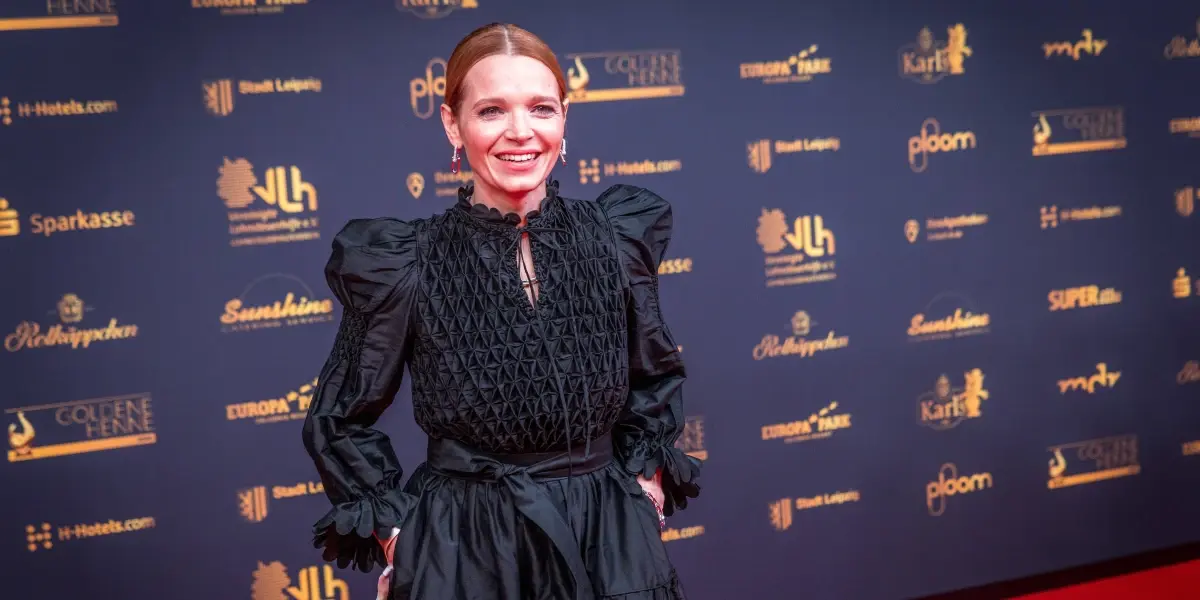
Karoline Herfurth
Karoline Herfurth is especially interesting for a professional German actors list because she is perceived not only as an actress, but also as a director and creative author of her material. Projects such as Wunderschön position her simultaneously as director, co-screenwriter, and lead actress. That makes her a face that works not only on screen, but also for stories about female creative power, modern audience cinema, and material development.
So if you are looking for well-known actresses from Germany who convey both reach and substance, Herfurth is a very strong choice. Her images can be placed in culture, society, and entertainment contexts alike. In practice, that is rare — and therefore valuable.
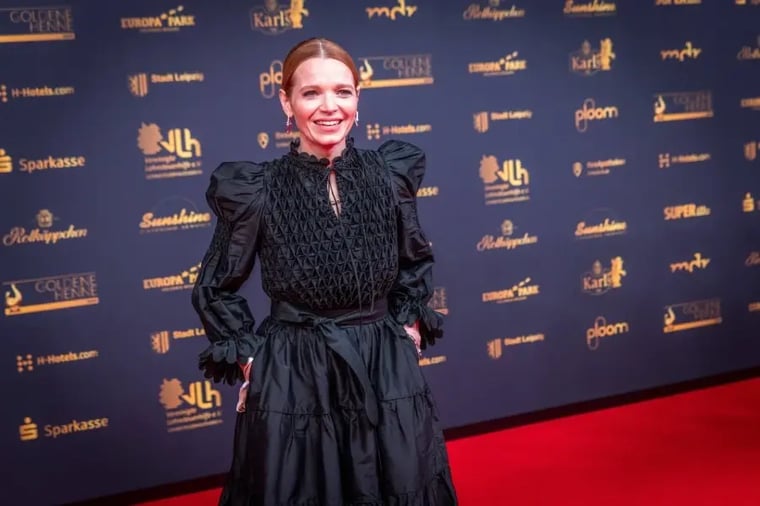 IMAGO / Christian Grube / Actress Karoline Herfurth at the 30th Goldene Henne awards in Leipzig in 2024.
Which names suit which subjects
For day-to-day work, it helps to translate the list into subject areas.
For film history, exile, glamour, and questions of style, Marlene Dietrich and Hanna Schygulla are especially strong. One stands for international myth, the other for German and European auteur cinema.
For political, historical, and memory-related subjects, Armin Mueller-Stahl, Martina Gedeck, Daniel Brühl, August Diehl, and Albrecht Schuch work exceptionally well. Their visual worlds carry seriousness and context.
For festival, awards, and contemporary cinema, Sandra Hüller, Nina Hoss, Franz Rogowski, and Diane Kruger should rank high. They represent different forms of relevance — from Oscar visibility to arthouse credibility.
For audience-friendly culture stories and digital reach, Jella Haase and Karoline Herfurth are especially interesting. They combine familiarity with accessibility and speak to larger target groups beyond the traditional arts pages.
That is the real value of a curated list: it does not just shorten the name search, it also structures the image research that follows.
Film star photos: Which image types work in editorial, documentary, and campaign contexts
Portraits and close-ups are ideal when personality is the focus. They work for interviews, essays, cultural commentary, birthday features, and obituaries. With strong actor faces such as Hüller, Hoss, or Mueller-Stahl, even small shifts in facial expression can change the direction of an entire piece.
Festival and red-carpet images, by contrast, signal timeliness. They immediately turn a person into a current topic. For Oscars, Cannes, Berlinale, or awards coverage, these images are often the first choice. With Diane Kruger or Sandra Hüller, that creates real added value, because their public visibility is closely tied to festival and awards contexts.
Set stills and scene images are strongest when you want to tell not just the person, but the role. With Martina Gedeck in political dramas or Daniel Brühl in historical material, a scene-based image can be far more precise in content than a neutral portrait. For dossiers, film criticism, and documentaries, set images are often the better choice.
Archival photos and early-career phases create depth. They show change, context, and development. Anyone using only a single glamorous portrait of Marlene Dietrich wastes narrative potential. The same applies to Hanna Schygulla, Armin Mueller-Stahl, or August Diehl. Only temporal layering turns image material into a story.
Group shots, award ceremonies, and contextual event images are excellent when relationships or networks are part of the story. An image with directors, co-stars, or a festival setting can say a great deal about how a person is positioned. For industry pieces, retrospectives, and festival specials, that is often more productive than the hundredth solo portrait.
Put simply, film star photos are never just decoration in professional use. They are a narrative tool. The more precisely you define the intended use, the stronger the image selection becomes.
Licensing actor images securely: How it works with IMAGO
Anyone working with actor imagery is almost always operating in an environment where image rights, personality rights, and intended use need to be clearly distinguished. The key point is this: a license does not transfer ownership of the image. It regulates the right of use; copyright remains with the respective creator or agency. That distinction is central in the day-to-day work of editorial teams, publishers, agencies, and production companies — especially when film star photos are meant to appear across multiple channels or formats.
For practical work, IMAGO offers the standard licensing models in its webshop that clearly define usage:
-
Rights Managed (RM) is generally suited to clearly defined, one-time uses, such as a specific article, a defined social media publication, or a clearly limited print run.
-
Royalty Free Classic (RF) is intended for repeated use without every individual use having to be separately reported again.
-
Royalty Free Premium (RF Premium) is designed for especially flexible projects and can — provided the additional rights are in place — also cover broader uses such as print, campaign assets, or packaging. For teams working across multiple channels, this distinction is not background knowledge. It is a production essential.
It is equally important to distinguish between editorial and commercial use. Editorial means reporting, information, and documentation — for example, culture articles, chronicles, dossiers, or educational materials. If your needs extend to commercial use, the client has to take care of third-party rights. Commercial includes advertising, sponsorship, product marketing, packaging, or merchandising. This is especially sensitive with actor imagery, because an image that works perfectly well in an editorial article may require additional permissions for advertising use. Prominent public figures regularly have strong rights tied to their likeness; their fame is not a free pass for commercial usage.
Then there are Model Release and Property Release. If people or private locations or objects are clearly recognizable and the use is commercial, the relevant releases may become necessary. IMAGO marks release status in the metadata and supports searches through matching filters. That is particularly helpful when an editorial team and a marketing department are working with similar visuals in parallel, but under different rights requirements. When in doubt, the rule is simple: define the intended use first, then choose the image — not the other way around.
For operational purchasing, IMAGO offers three particularly practical routes:
-
The Webshop with Single License makes sense if you want to license individual images directly for a specific publication.
-
The Webshop Credit Packages with a 365-day validity period are suitable for teams that buy regularly and want to respond more flexibly to demand.
-
For larger volumes, recurring requirements, or customized contract models, the Sales Manager route is the right choice.
It also makes sense to work consistently across the internal areas of Licenses, Rights Managed, and Royalty Free Premium so that recurring formats are not interpreted differently every single time.
From the perspective of documentary and media productions, it is also relevant that IMAGO provides high-resolution editorial photos, archival material, stock footage, sports and entertainment content, as well as flexible licensing models for film and documentary projects. For elaborate culture, celebrity, or archive-driven topics, that is often just as important in everyday work as the individual image itself.
How the list becomes a reliable image research workflow
The next step is to turn the curated selection into a clear search brief. Do not work only with people’s names; always combine Name + occasion + time frame + image type. Instead of searching only for “Sandra Hüller,” “Sandra Hüller Cannes portrait,” “Sandra Hüller Anatomy of a Fall premiere,” or “Sandra Hüller red carpet close-up” is often much more efficient.
For historical subjects, it is worth planning a second layer of research. With Marlene Dietrich, Hanna Schygulla, or Armin Mueller-Stahl, the question is not only whether image material exists, but from which phase. Early work, international breakthroughs, award ceremonies, stage moments, political appearances, or later portraits all tell different stories. A good image feature depends on using those differences deliberately.
With current faces, you should also distinguish between timeliness and lasting value. A current festival image may drive reach, but it can lose relevance quickly. A strong, timeless portrait can work across multiple contexts. Efficient teams therefore build not only a current selection, but also a small evergreen folder in parallel.
And one more practical point: always think about later placement. Horizontal formats with negative space are suitable for headers and teasers. Tight portraits work strongly in the social feed. Contextual images with directors or ensembles are ideal for documentary and industry pieces. That is how a German actors list stops being a static SEO term and becomes a productive research workflow.
Closing thought
A strong German actors list is never just an overview of names for media projects. It is a strategic tool. It helps you condense subjects more quickly, build image features more intelligently, and distinguish between historical depth, current relevance, and visual impact.
If you are searching for well-known actors and actresses from Germany, you should not ask only who is famous. You should also ask which face carries which story. Marlene Dietrich stands for myth and era, Hanna Schygulla for auteur cinema, Daniel Brühl for European accessibility, Sandra Hüller for the present of international arthouse cinema, and Jella Haase and Karoline Herfurth for reach and modern audience appeal. That differentiation is exactly what separates generic content from professional image work.
And finally, strong film star photos only deliver their full value when selection, context, and licensing fit together. Anyone who thinks those elements through carefully can use IMAGO not only to find images, but to execute media projects efficiently, consistently, and with legal confidence.
To discuss your specific needs or explore personalized solutions, we invite you to contact our Sales team. Our specialists can guide you through the image selection and licensing process, ensuring you find the perfect visual content for your projects.