
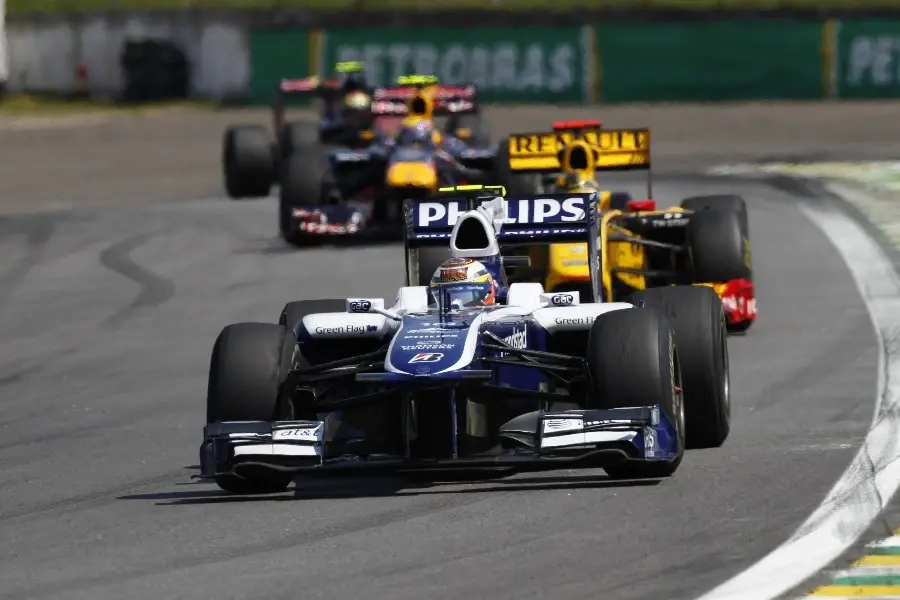
Nico Hülkenberg has established himself as a consistent performer in Formula 1 for more than a decade and a half. His profile spans from an early qualifying thunderbolt to a late, widely noted podium debut. The throughline of his career: dependable pace, precise setup work, and reliability in the midfield. After early stints with Williams, Force India, and Sauber came formative years at Renault, a phase as a reserve driver, and a comeback with Haas. In 2025 he achieved the long‑awaited first podium, before a move to the Audi works team in 2026.
Early Successes and the Road to Formula 1
Hülkenberg won the Formula 3 Euro Series in 2008 and the GP2 Championship in 2009 — the direct gateway to Formula 1. He debuted with Williams in 2010 and made a statement with pole position at the Brazilian Grand Prix in changeable conditions. In the races he scored points regularly and finished the season 14th overall. After the Williams year, he served as a test and reserve driver for Force India in 2011.
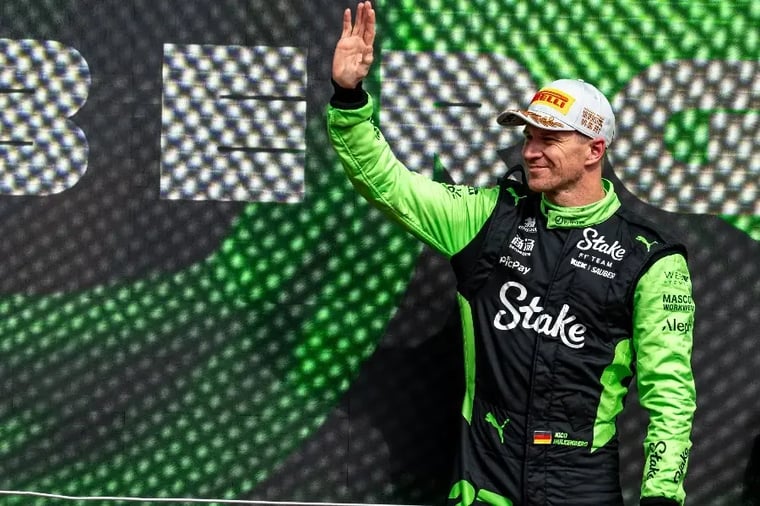
IMAGO / Michael Potts / Nico Hulkenberg, racing for the Stake F1 Team team during the 2025 Formula 1 British Grand Prix at the Silverstone Circuit in Silverstone, United Kingdom.
Establishing Himself in the Midfield: Force India and Sauber
From 2012 Hülkenberg raced full‑time for Force India, scoring consistently and taking a then‑best fourth place at Spa. In 2013 he switched to Sauber and, despite limited car performance, earned notable results — including P4 in Korea in direct battles with world champions. With 51 points he ended the season 10th in the championship and was by then regarded as a midfield benchmark.
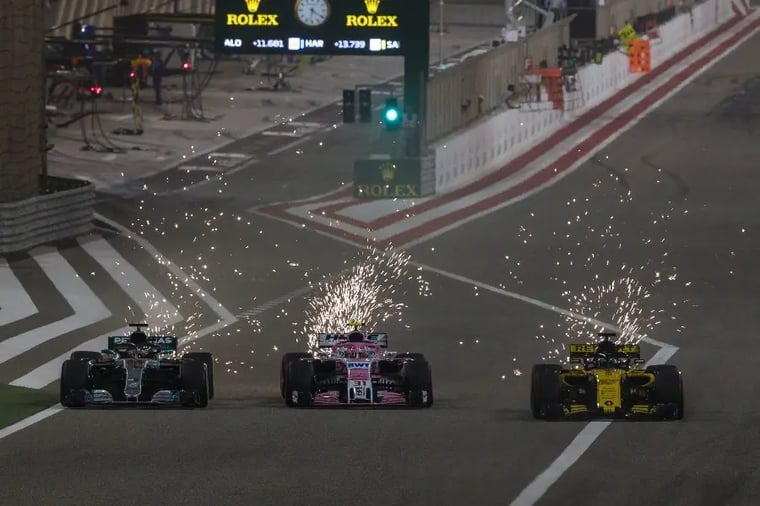
IMAGO / Eibner / Lewis Hamilton (Mercedes AMG Petronas Formula One Team) in a duel with Esteban Ocon (Sahara Force India F1 Team) and Nico Huelkenberg (Renault F1 Team), Bahrain Grand Prix 2018, race, motorsport, Formula 1, 08.04.2018.
Return to Force India and Le Mans Victory
For 2014 Hülkenberg returned to Force India, opening strongly with sixth in Australia. Through the first half of the season he even ran as high as third in the drivers’ standings and finished 2014 ninth, ahead of teammate Sergio Pérez. In 2015 he made a mark outside Formula 1: with Porsche he won the 24 Hours of Le Mans — a rare feat for an active F1 driver. He remained with Force India through 2016; podiums were out of reach given the team’s overall package.
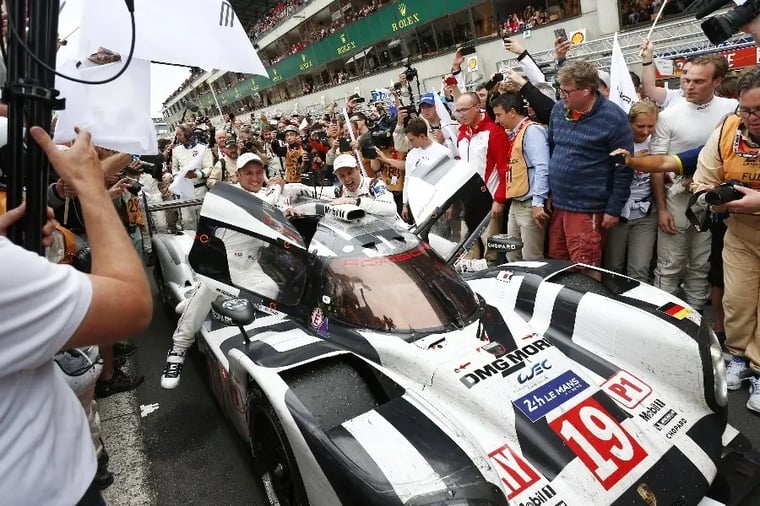
IMAGO / HochZwei / Motorsports: FIA WEC 2015: 24 Heures du Mans, Porsche 919 Hybrid, Porsche Team: Nico Huelkenberg, Earl Bamber, Nick Tandy.
Renault Years and Interim Tally Before the Break
From 2017 to 2019 Hülkenberg drove for Renault, scored reliably, and achieved his best overall result with seventh in the 2018 World Championship. The podium eluded him there as well. At the end of 2019 his Renault chapter closed — and his time as a full‑season race driver initially appeared to be over.

IMAGO / HochZwei / Motorsports: FIA Formula One World Championship, WM, Weltmeisterschaft 2019, Grand Prix of Italy, 27 Nico Hulkenberg (GER, Renault F1 Team), Monza Italy.
“Super‑Sub” and Comeback: 2020 to 2023
In 2020 Hülkenberg stepped in multiple times at Racing Point, impressing immediately in qualifying and banking significant points from few appearances. In 2022 he made two substitute starts for Aston Martin. In 2023 Haas brought him back as a full‑time driver. He scored in Australia (P7), comfortably outperformed teammate Kevin Magnussen over the season, and finished 16th in the championship — a solid re‑entry given the car’s level.

IMAGO / Nordphoto / Formula 1 Etihad Airways, Abu Dhabi Grand Prix 2025 06.12.2025, Yas Marina Circuit, Abu Dhabi, Formula 1 Etihad Airways Abu Dhabi Grand Prix 2025, in the picture Nico Hülkenberg (DEU), Stake F1 Team Kick Sauber.
2024 Season: Stability and Qualifying Strength at Haas
Hülkenberg confirmed his form in 2024. Early points in Saudi Arabia and Australia, plus additional scores in sprint and Grand Prix formats underlined his consistency. He finished sixth in both Spielberg and Silverstone — the team’s top results. In qualifying he reached Q3 in 14 of 30 sessions (including sprints) and clearly won the intra‑team duel. According to team principal Ayao Komatsu, his experience and setup work were key to the car’s development. Season summary: 41 points and 11th in the World Championship, while Magnussen ended on 16 points.
Move to Sauber for 2025: Audi Perspective
For 2025 Hülkenberg returned to Sauber — preparing for the transition to the Audi works team in 2026. Alongside Formula 2 graduate Gabriel Bortoleto, he was expected to stabilize the team with experience and technical feedback. The Sauber C45 was conceived as a transitional package; short‑term top results were not the target, with structural progress the priority.
2025 Season: Midfield Work and the Podium Debut
The season started mixed: points at the opener in Australia, then fluctuating pace — and a disqualification in Bahrain for excessive plank wear after a hard‑fought race. The European leg brought a turnaround: a major update for the Spanish Grand Prix made the C45 more competitive. From P16 on the grid, Hülkenberg charged to fifth, pulling off eye‑catching overtakes late on.
In the following races Sauber established itself in the fight for the top 10. The season’s key storyline came at Silverstone: from P19 on the grid, Hülkenberg finished third in a rain‑affected race — his first Formula 1 podium, achieved at his 239th Grand Prix. The podium was also Sauber’s first since 2012 and the first for a German driver since 2021.

IMAGO / Nordphoto / Nico Hülkenberg (DEU), driving for F1 Team Kick Sauber.
After the high point came solid results with further points in the United States, Brazil, and Las Vegas. At the finale in Abu Dhabi — Hülkenberg’s 250th Grand Prix — ninth place brought two more points for Sauber. The team finished the season ninth in the Constructors’ Championship with 70 points; Hülkenberg contributed 51 and, as in 2024, placed 11th in the World Championship.
Outlook to 2026: Audi Works Team
With the end of the 2025 season, the Sauber chapter also closes. From 2026 Audi will enter with its works team, with Hülkenberg set as an experienced development driver. The goal is gradual progress toward regular top‑10 finishes, with potential for more once the overall package and processes gel. The 2024 and 2025 seasons showed that he continues to set benchmarks in the midfield in both qualifying and race trim.
Key Career Milestones
- 2009: GP2 Championship title
- 2010: Formula 1 debut with Williams; pole position in Brazil
- 2015: Victory at the 24 Hours of Le Mans (Porsche)
- 2017–2019: Renault race driver; best World Championship finish P7 (2018)
- 2020/2022: Substitute appearances (“Super‑Sub”)
- 2023: Comeback as Haas race driver, clearly ahead of Magnussen
- 2024: 41 World Championship points, P11; multiple Q3 appearances and team bests for Haas
- 2025: Return to Sauber; first F1 podium (Silverstone); season ends with 51 points
IMAGO: Image Content and Licensing — concise and fact‑based
IMAGO works with an international network of partner photographers, agencies, and archives, providing image and video content across Sports, News, Entertainment, Creative, and Archival material. IMAGO has no in‑house photography and does not guarantee exclusivity; instead, it provides clear and flexible licensing models. These include Rights Managed, Royalty Free Classic, and Royalty Free Premium. Each license precisely defines how, where, and for how long content can be used; copyright remains with the respective photographer or agency.
For non‑editorial uses, Model or Property Releases are required where applicable; without these, use is editorial only. IMAGO supports filtering by license category and indicates release status in the metadata only for Creative (stock) images that may be used commercially; Editorial images do not contain release information in their metadata. Access is available via the webshop — either single purchases or credit packages — or through personal consultation with Sales Managers. If a client intends to extend an Editorial image for non‑editorial (commercial) use, the client is responsible for clearing any third‑party rights (e.g., depicted persons, trademarks, properties).“Images are licensed for editorial use; commercial use requires a corresponding license (non‑exclusive).”
License Sports Images Tailored to Your Needs
Real-time editorial sports images across all major sports, including football, F1, tennis, and more, plus access to the largest editorial sports archives. Flexible licensing and fast support in Europe and worldwide.
Learn more