
-1.webp)
In modern football, success or failure is no longer determined solely by the quality of the players. The greatest football coaches of all time shape playing philosophies, develop systems, and turn individual talents into cohesive teams. They stand behind the sport’s greatest successes — from World Cup titles to dominant league eras — and are regarded as the strategic minds behind sustained success. Anyone who looks at the most important coaches in football history quickly realizes: it is not only about trophies, but also about ideas, leadership style, and the development of legendary football tactics.
This article combines historical context with a look at the present. It shows how the most successful football coaches of past decades continue to influence modern football today — and which approaches could shape the next generation of coaches with a view to the 2026 World Cup. The focus is on the evolution of tactical concepts, their adaptation to new realities of the game, and their influence on national teams.
Legends Who Shaped the Game
Sir Alex Ferguson – the most successful club coach
When people talk about the greatest football coach of all time, the name Sir Alex Ferguson comes first. The Scot shaped European club football like hardly anyone else. His coaching career began at the Scottish clubs St. Mirren and Aberdeen, with whom he won cups and the Scottish league title. In 1986, he took over Manchester United and stayed there for 27 years. Under his leadership, the English giant won 49 trophies, including 13 English league titles, five FA Cups, and two Champions League trophies. This impressive haul made him the personification of consistency and success in club football.
Ferguson’s secret to success was not only his tactical flexibility, but also his ability to rebuild teams across generations. He shaped teams around talents such as Ryan Giggs, Paul Scholes, and Cristiano Ronaldo, rebuilt them, and turned them into champions. His famous “Fergie Time,” which produced decisive goals in stoppage time, symbolizes his mental strength and the never-ending motivation to win matches until the very last second. Beyond the statistics, he remains a role model for modern coaches in terms of man-management and long-term thinking.
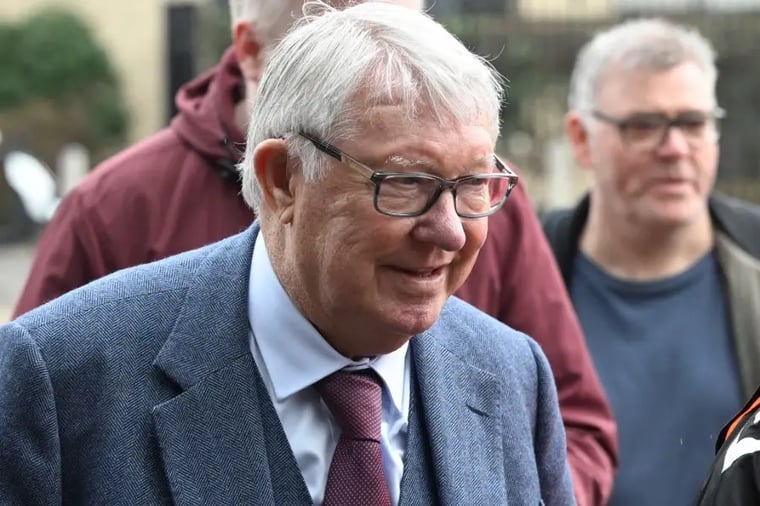 IMAGO / Sportimage / Neil Hanna | Edinburgh, Scotland, 28 February 2026. Sir Alex Ferguson arrives for the Scottish Premiership match Hearts vs Aberdeen at Tynecastle Park.
Pep Guardiola – the perfectionist of positional play
Pep Guardiola, currently the manager of Manchester City, is one of the most successful football managers and has influenced the style of modern teams like few others. As Barcelona coach, he won the treble of league title, cup, and Champions League in his first season, 2008/09. After successful spells at Bayern Munich and Manchester City, he collected numerous titles: the statistics list 12 league titles, 16 domestic cup victories, three Champions League triumphs, four UEFA Super Cups, and four FIFA Club World Cups. With Manchester City, he won six Premier League titles in seven years and set another milestone with a historic treble in 2022/23.
Guardiola’s tactics are based on sophisticated positional play. He wants his team to control the ball, apply pressing, and use flexible formations. His famous triangle-based game — in which players always have at least two passing options — is a continuation of Johan Cruyff’s “Total Football.” Inverted full-backs and aggressive high pressing are also hallmark elements of his style. Guardiola is regarded as a perfectionist who trains details such as the right timing of passes or spatial distribution to perfection. For modern national-team coaches, he serves as an inspiration for possession-based attacking football.
 IMAGO / Sportimage / Andrew Yates / Manchester, England, 4 March 2026. A disappointed Pep Guardiola, Manchester City manager, during the Premier League match Manchester City vs Nottingham Forest at the Etihad Stadium.
Johan Cruyff – visionary of Total Football
Johan Cruyff was a pioneer both as a player and as a coach. As Ajax coach (1985–1988), he won the European Cup Winners’ Cup in 1987 before taking over FC Barcelona in 1988. There he led the “Dream Team” generation to four consecutive La Liga titles and victory in the European Cup in 1992. Cruyff’s influence goes beyond trophies: he made “Total Football” mainstream — a style defined by positional interchanges, possession, and mobility. He emphasized that football consists of “passing and ball control.”
His tactical ideas included a 3-4-3 system arranged in a diamond shape that created triangles. Players were expected to stay in constant motion in order to create and occupy spaces. Cruyff taught that the ball is faster than any player — a philosophy that shaped FC Barcelona’s style of play and was later further developed by Guardiola. Many modern coaches incorporate elements of Cruyff’s philosophy into their teams, such as pushing up the defensive line or the constant shifting of midfielders.
Arrigo Sacchi – the revolutionary of pressing
Arrigo Sacchi fundamentally changed Italian football. Before him, “catenaccio” — a defensive style with man-marking — dominated in Italy. Sacchi, who never played professionally himself, introduced a radical pressing system at AC Milan in the late 1980s. With players such as Franco Baresi, Paolo Maldini, and Ruud Gullit, he won two consecutive European Cups (1989 and 1990). He favored a 4-4-2 with zonal marking, in which the entire team pressed as a unit to force the opponent into mistakes. In his autobiography, he emphasizes that the key lies “in pressing the ball and attacking and defending together.” Sacchi’s approach revolutionized the defensive and offensive behavior of teams; many coaches still adopt his principles today.
Carlo Ancelotti – the flexible pragmatist
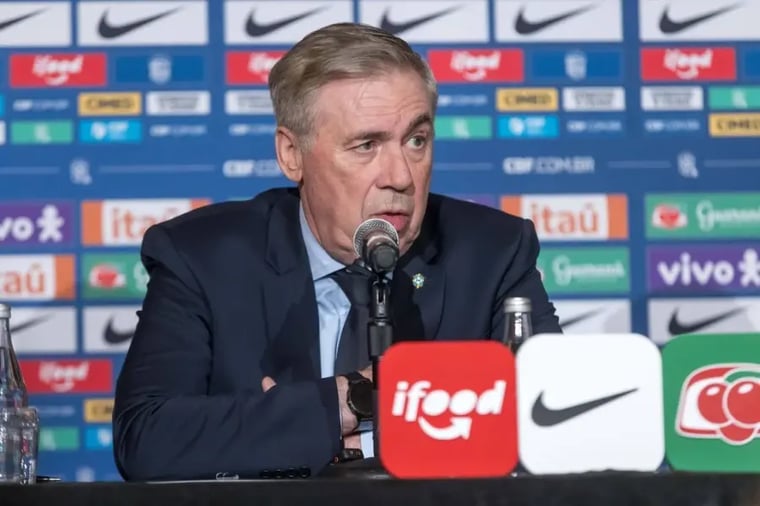
Carlo Ancelotti is one of the most decorated coaches ever. According to Transfermarkt, he won five Champions League titles (two with AC Milan, three with Real Madrid) and is the first coach to win league titles in Italy, England, Spain, Germany, and France. He left Real Madrid in 2023 as the most successful coach in the club’s history with 15 titles and 249 wins in 352 matches. His tactical philosophy is pragmatic: he adapts the system to the quality of the players. At Real Madrid, he used a 4-3-3 with a creative midfield around Luka Modrić and Toni Kroos; at AC Milan, he became famous for the diamond midfield with Andrea Pirlo. Ancelotti’s balance between attacking ambition and defensive stability makes him a role model for national-team coaches who need to integrate different types of players.
After his time in Madrid, Carlo Ancelotti will also take over the Brazilian national team. As reported by “The Guardian,” he would become the first foreign coach of the Seleção and is expected to lead the team to the 2026 World Cup after the tenure of interim coach Fernando Diniz. Brazil is traditionally seen as a pioneer of attacking systems, and the appointment of a European coach reflects the desire to combine tactical variety with South American creativity.
Legendary Football Tactics and Their Impact
Modern football is shaped by tactical trends that often originated decades earlier. The legendary football tactics of the great coaches continue to influence the systems used by national teams today.
Total Football and positional play
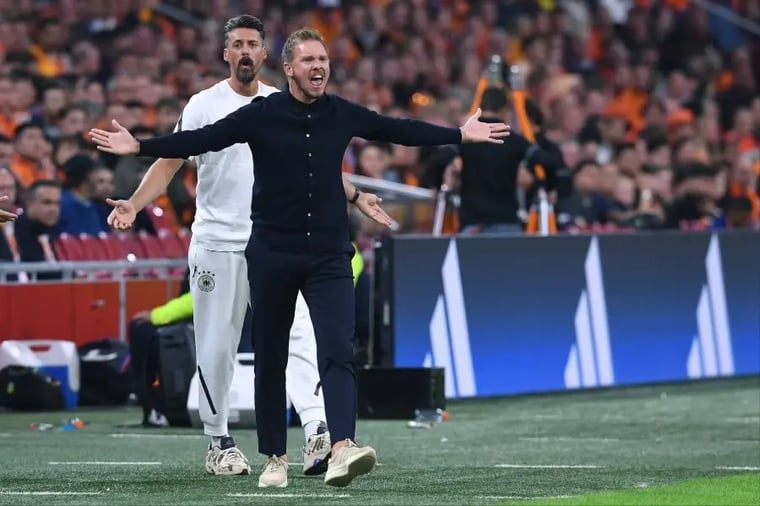
The basic idea that all players should contribute both offensively and defensively was developed by Cruyff and Rinus Michels. Guardiola refined this concept into a complex positional game in which players constantly form triangles. National coaches such as Julian Nagelsmann apply similar mechanisms by using fluid 4-2-3-1 or 3-4-2-1 formations that combine possession and counter-pressing.
Pressing and counter-pressing
Sacchi’s Milan and later Jürgen Klopp at Borussia Dortmund and Liverpool emphasized ball-oriented pressing. Sacchi had his team shift as a compact block so that the ball carrier had no passing options. Modern coaches such as Luis de la Fuente or Lionel Scaloni rely on applying pressure immediately after losing possession. The counter-pressing approach means players must be physically and mentally at the top of their game.
Flexibility and hybrid systems
Ancelotti showed at Real Madrid that systems must be adapted to the players. His approach of switching between 4-3-3, 4-4-2, or 4-2-3-1 in different phases of the game is now copied by national-team coaches such as Roberto Martínez or Marcelo Bielsa. Bielsa traditionally relies on an extremely attacking 3-3-3-1 setup, but adapts it in Uruguay to the available talent and plans to surprise at the 2026 World Cup with high pressing.
Man-management and long-term team leadership
Ferguson proved that success is not built on tactics alone. His handling of stars and young talents provides a model for coaches planning across multiple tournaments. Didier Deschamps relies on a stable hierarchy and personal closeness with France, which helped him become world champion in 2018 and runner-up in 2022. Such soft factors are often decisive when different generations and personalities come together in a national team.
These tactical ideas form the backdrop for looking at today’s national coaches and their chances at the 2026 World Cup.
The Current Hopefuls for the 2026 World Cup
The upcoming World Cup in the United States, Canada, and Mexico will change the character of the global football stage. It is the first final tournament with 48 teams, staged across three countries. A look at the national coaches shows which personalities could define the tournament narrative.
Didier Deschamps (France)
Didier Deschamps has been in charge of the French national team since 2012 and previously captained the World Cup-winning side of 1998. Under his leadership, France won the 2018 World Cup and reached the final again in 2022. Now 57, the Basque coach has repeatedly confirmed that he will step down after the 2026 World Cup — “In 2026 it will be over… in my head it’s very clear,” he said, emphasizing that there is a time to move on. His contract runs until after the tournament.
French Football Federation president Philippe Diallo revealed in early 2026 that he already knows the identity of the next head coach, noting that fewer than five candidates — all French — were considered. According to multiple reports, Zinedine Zidane has reached a verbal agreement with the federation and is expected to take over after the World Cup, although an official announcement will only follow the tournament to avoid disrupting Deschamps’ final campaign.
Tactically, Deschamps continues to rely on defensive stability. During Euro 2024, France’s compact defensive structure was widely praised, even if attacking efficiency occasionally lagged behind. He typically balances this approach with quick transitions and a structured midfield. Offensively, he builds around experienced leaders such as Antoine Griezmann, Kylian Mbappé, and Aurélien Tchouaméni. At the same time, he continues to integrate emerging talents — including players like Michael Olise, Rayan Cherki, and Warren Zaïre-Emery, who were part of the March 2026 squad.
With this blend of proven stars and rising prospects, France heads into the 2026 tournament as one of the favorites — and Deschamps will aim to conclude his 14-year tenure with another major title.
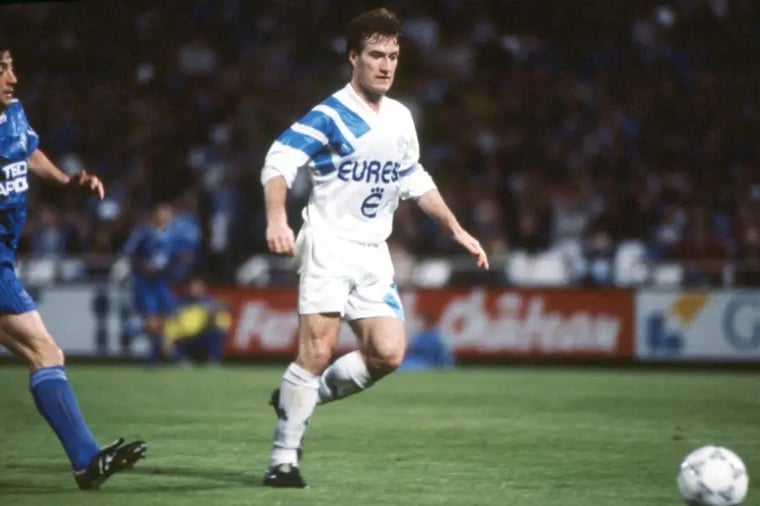 IMAGO / Buzzi / Didier Deschamps in a match between Olympique de Marseille and Strasbourg (5-0), 1993.
Julian Nagelsmann (Germany)
At 38, Julian Nagelsmann is one of the youngest national-team coaches. After replacing Hansi Flick in September 2023, he led the German team to renewed success in friendlies. In April 2024, the German Football Association extended his contract until 2026. In a Reuters report, Nagelsmann said that he wants to “continue developing this team and inspire the fans.” Nagelsmann is known for flexible tactics and relies on a mix of experienced players such as Ilkay Gündogan and talents such as Jamal Musiala. EURO 2024 at home was an intermediate goal, but the main focus is on a strong World Cup performance in North America. His analytical style and openness to data analysis make him a modern coach.
Luis de la Fuente (Spain)
Luis de la Fuente took over the Spanish national team at the end of 2022. After winning the Nations League in 2023 and triumphing at EURO 2024, he extended his contract until 2028. De la Fuente must guide Spain through qualification for the 2026 World Cup and relies on possession-based football with quick changes of pace. In interviews, he has admitted that he constantly evaluates his team critically and always wants to improve it. His long-term work with the generation around Pedri, Gavi, and Nico Williams gives Spain huge potential for the future.
Lionel Scaloni (Argentina)
Lionel Scaloni initially led Argentina into chaos as interim coach in 2018 — and then to triumph. In 2021, he won the Copa América, and in 2022, the country secured its second World Cup title. The Argentine Football Association confirmed his contract until 2026 and praised his gratitude toward the federation and the players. Scaloni combines experienced stars such as Lionel Messi (who is expected to play his final tournament) with young talents like Enzo Fernández and Julián Álvarez. He relies on a compact 4-4-2 that shifts into a 4-3-3 in possession. Expectations in Argentina are high, but Scaloni has proven he can handle pressure.
Thomas Tuchel (England)
England’s football association took a new path in 2025 by appointing German coach Thomas Tuchel. The former Chelsea, Paris Saint-Germain, and Bayern Munich manager is regarded as a brilliant tactician. In October 2024, the association confirmed his appointment as the third foreign coach to hold this prestigious position. Tuchel replaced Gareth Southgate and initially received an 18-month contract for the 2026 World Cup. His previous collaboration with assistant Anthony Barry is continuing.
After England won all eight qualification matches comfortably without conceding a goal, the association extended Tuchel’s contract until 2028. The coach stated that he was “very happy and proud to continue coaching England.” This long-term planning is intended to provide continuity, especially with England set to host EURO 2028. Tuchel’s style combines controlled possession with quick transitions. He trusts players such as Harry Kane, Jude Bellingham, and Phil Foden and is known for the adaptability of his teams.
 IMAGO / DeFodi / Borussia Dortmund training camp in Marbella, coach Thomas Tuchel with the team on 10 January 2017.
Roberto Martínez (Portugal)
Spanish coach Roberto Martínez, known for his time with Belgium’s “Golden Generation,” was presented in January 2023 as the successor to Fernando Santos. According to the Spanish magazine “AS,” he signed a contract binding him to Portugal until the 2026 World Cup, covering both EURO 2024 and the tournament in North America. After the disappointing exit at EURO 2024, Martínez defended his work but emphasized that criticism is part of high expectations. He relies on aggressive, ball-oriented systems and plans to build a team around Bernardo Silva, Bruno Fernandes, and the younger generation (including Gonçalo Ramos). His philosophy is based on possession football, but with more vertical dynamism than under his predecessor.
Marcelo Bielsa (Uruguay)
Argentine coach Marcelo Bielsa took charge of the Uruguayan national team in May 2023. The federation confirmed that he signed a contract until 2026. Bielsa is famous for his attacking style and his 3-3-3-1 formation; he demands extreme work rate and physical intensity. In Uruguay, he has a talented squad featuring Darwin Núñez and Federico Valverde. Bielsa said at his unveiling that he was convinced by the quality of the squad. The aim is to return Uruguay to the top of South America and spring surprises in North America.
Luciano Spalletti (Italy)
Italian title-winning coach Luciano Spalletti took over as national-team manager in 2023 after Roberto Mancini resigned unexpectedly. Although Italy exited EURO 2024 in the round of 16, federation president Gabriele Gravina reaffirmed that Spalletti would remain in office until 2026 as planned. The experienced coach led Napoli to its first Scudetto in 33 years in 2023 and relies on quick wingers, possession, and aggressive pressing. He is building the team around Jorginho, Nicolò Barella, and younger stars such as Federico Chiesa. Spalletti is expected to return the Azzurri to the international stage after they missed the 2018 World Cup and then disappointed in 2022 despite being reigning European champions.

Jaime Lozano (Mexico)
As one of the 2026 World Cup co-hosts, Mexico is under particular pressure. Jaime Lozano, who first took over on an interim basis in 2023, was confirmed by the federation as head coach. Reuters reported that the Federación Mexicana de Fútbol extended his term until 2026. Before the 2024 Copa América, Lozano said that the tournament was the best preparation for the World Cup because it meant playing against world-class teams. Despite criticism after defeats against the USA and Uruguay, he is trying to integrate young talents such as Santiago Giménez and Edson Álvarez. His goal is to lead Mexico into the knockout stage — an ambitious task in front of a home crowd.
Ronald Koeman (Netherlands)
After Louis van Gaal stepped down, Ronald Koeman returned as head coach of the Netherlands in 2023. In April 2022, the KNVB announced that Koeman had signed a contract through 2026, meaning he would oversee EURO 2024 and the 2026 World Cup. Expectations for “Oranje” remain high, and ahead of World Cup qualification Koeman emphasized that the Netherlands are obliged to win their group. He relies on a mix of experienced defenders such as Virgil van Dijk and young attacking players like Xavi Simons. His preferred system is a 4-3-3 that enables quick attacks down the flanks.
Gregg Berhalter (USA)
The USA, also a co-host, is likewise relying on continuity. Gregg Berhalter was reappointed in June 2023 after a six-month break to lead the team to the 2026 World Cup. Berhalter had previously clashed with the federation over a private incident, but returned and emphasized the focus on team culture and player development. He uses a 4-3-3 with high pressing and wants to shape players such as Christian Pulisic, Weston McKennie, and Giovanni Reyna into a competitive unit. For the USA, the tournament is an opportunity to raise international prestige and promote a talented generation of players.
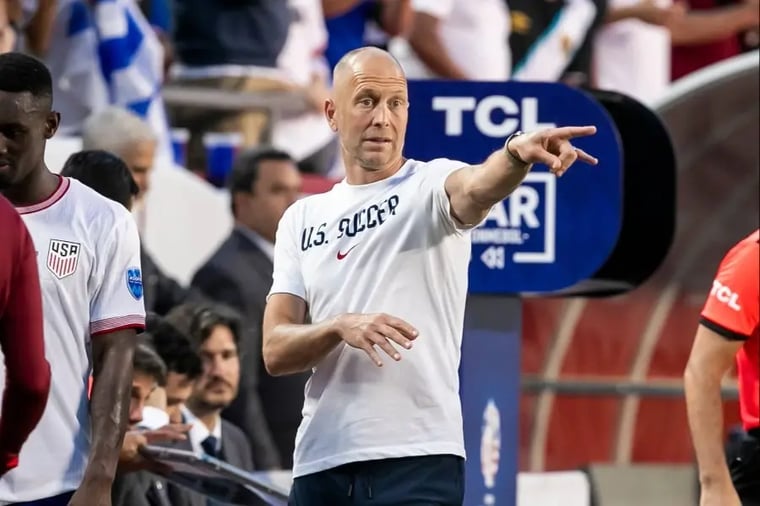 IMAGO / Icon Sportswire / Nick Tre. Smith / United States head coach Gregg Berhalter directs his players during the Group A match between the United States and Uruguay on 1 July 2024 at Arrowhead Stadium in Kansas City.
What Modern Coaches Can Learn from the Legends
The journey of national-team coaches toward the 2026 World Cup reflects how tactical concepts from the past are merging with modern approaches. A few observations:
-
Long-term planning and adaptability: Sir Alex Ferguson proved that constant winning is only possible if a coach identifies talent early and carries out bold rebuilds. National-team coaches such as Deschamps and Scaloni adopt this long-term mindset: they rely on continuity, but also on regular generational change.
-
Combining positional play and pressing: Guardiola and Cruyff laid the foundation for possession-based football. But it is only the combination with Sacchi’s pressing that creates the modern style used by coaches such as Nagelsmann or Spalletti. Quick transitions after losing the ball are a key element of successful modern national teams.
-
Psychological leadership: Ferguson, Deschamps, and Ancelotti stand out for empathetic leadership. Managing stars requires emotional intelligence, clear communication, and discipline. Tuchel is considered demanding, but he works closely with his team and emphasizes the importance of trust.
-
Flexibility instead of rigid systems: Sacchi showed that pressing only works when all players act together. Bielsa, meanwhile, uses an extreme 3-3-3-1 that is rare in modern football, but tailored to the talent available in Uruguay. Ancelotti adapts his system depending on the squad. Modern national-team coaches must adapt their philosophy to the reality of their team rather than stick to dogma.
-
Use of data and technology: Newer coaches such as Nagelsmann or de la Fuente increasingly rely on data analysis to identify patterns and make decisions. They combine these “Moneyball” elements with classic coaching principles. The analysis helps identify weaknesses and plan training sessions more effectively.
The Importance of Images in Football Journalism
Images often tell stories faster than words and play a central role in conveying emotion. For an article about football coaches, this means:
-
Choose original photos: Show coaches in characteristic situations — during an emotional team talk, gesturing on the touchline, or interacting with players. Such images emphasize the coach’s personality.
-
Contextualized captions: Captions should include names, location, and date, such as “Pep Guardiola celebrates at the 2023 Champions League final in Istanbul.” This precision increases credibility and makes the image easier to find again.
-
Include keywords in file names: For SEO optimization, file names should contain terms such as “greatest-football-coach-of-all-time” or “legendary-football-tactics.” This helps search engines classify the images more effectively.
-
Use visual storytelling: Use image sequences to show the course of a career — for example, Sir Alex Ferguson with young players in the 1990s and later while winning his final league title. Tactical graphics (Cruyff’s 3-4-3 or Sacchi’s 4-4-2) can also illustrate complex content.
Licensing Images Legally
Anyone publishing images always operates in the area of tension between image rights, personality rights, and intended use. A license does not transfer ownership of the image — it only regulates the right of use, while copyright remains with the respective photographer or agency. IMAGO offers different licensing models in its website for this purpose:
-
Rights Managed (RM): This license is suitable for clearly defined, one-time uses, such as a single article, a specific social-media publication, or a defined print run. Duration, territory, and medium can be specified precisely.
-
Royalty Free Classic (RF Classic): This model allows repeated use of an image without requiring a separate report each time. Depending on the version (Standard or Extended), different usage ranges apply.
-
Royalty Free Premium (RF Premium): This license offers particularly flexible usage options for larger projects such as print campaigns, packaging, or merchandising.
We advise you on the right images for football and other sports — including tailored media packages.
The distinction between editorial and commercial use is crucial. Editorial use refers to reporting, information, or documentation, for example in articles, chronicles, or educational materials. Commercial use includes advertising, sponsorship, product marketing, packaging, or merchandising and may require additional permissions. Model releases (consent from depicted persons) and property releases (permission from owners — for example for private buildings or artworks) are necessary as soon as people or private locations are clearly recognizable and the use becomes commercial. IMAGO indicates release status in the metadata and enables targeted searches for images with the corresponding clearances.
IMAGO offers three common purchasing routes: via the webshop, individual licenses can be purchased directly for specific publications; credit packages with a term are suitable for regular buyers; larger projects or individual contract models can be handled through a personal sales manager.
License Sports Images Tailored to Your Needs
Real-time editorial sports images across all major sports, including football, F1, tennis, and more, plus access to the largest editorial sports archives. Flexible licensing and fast support in Europe and worldwide.
Learn more