
.webp)
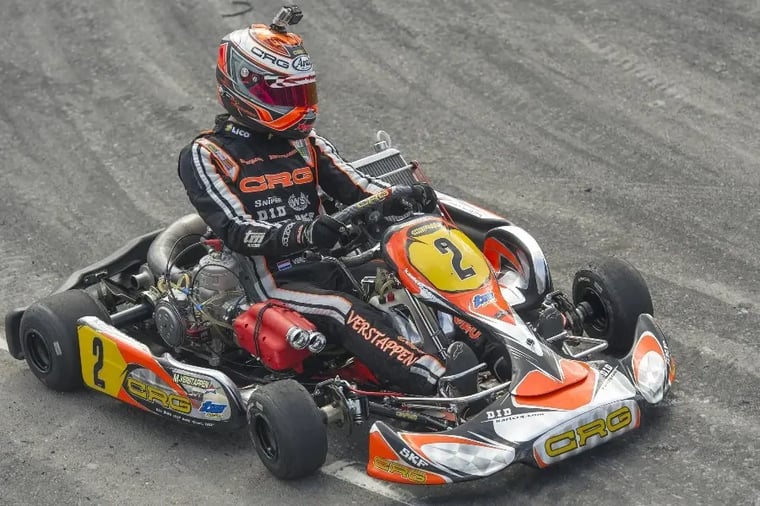
IMAGO / ANP/ Jos en Max Verstappen City race Rotterdam autosport 2013
Early years: racing in his blood
Max Emilian Verstappen was born on September 30, 1997, in Hasselt, Belgium. Motorsport shaped him early: his father, Jos, raced in Formula 1 in the 1990s and 2000s, while his mother, Sophie Kumpen, competed in karting. In 2013, Verstappen won the CIK‑FIA Karting World Championship in the KZ shifter class — a key milestone of his junior career.
In 2014, he stepped up to the FIA Formula 3 European Championship and finished third overall as a rookie; at the same time, Red Bull added him to its Junior Team. Only days after his 17th birthday, he took part in his first official Formula 1 session during free practice at the 2014 Japanese Grand Prix — the youngest participant at a World Championship weekend.
Formula 1 debut at 17
For the 2015 season, Verstappen joined Toro Rosso and immediately made history: he became the youngest driver to start a Formula 1 race and, in Malaysia, the youngest to score championship points. Over the year, he established himself with eye‑catching overtakes and consistent midfield results.
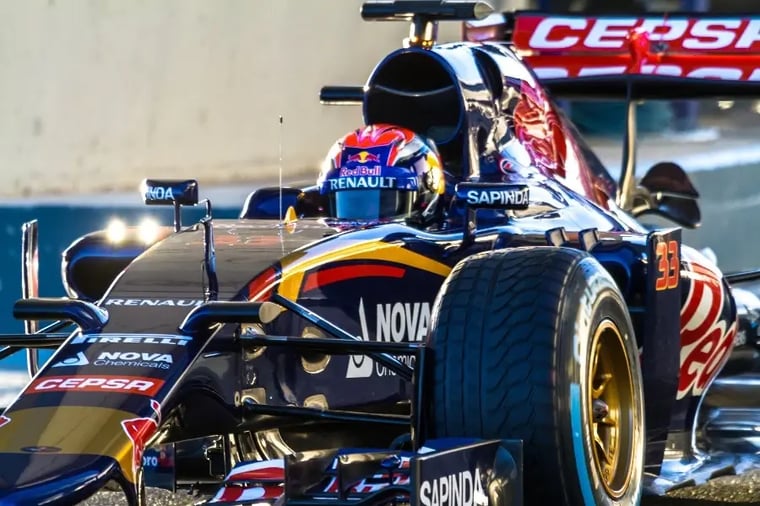
IMAGO / Dreamstime / Scuderia Toro Rosso F1 Team, Max Verstappen, 2015, JEREZ DE LA FRONTERA, SPAIN - FEB 04: Max Verstappen of Scuderia Toro Rosso F1 Team leaving pits .on training session on February 04 , 2015, in Jerez de la Frontera , Spain
Rise at Red Bull: first win, new standards
After four races of 2016, Verstappen was promoted to Red Bull — and won his very first start for the works team in Barcelona. At 18 years and 228 days, he became the youngest Grand Prix winner to date; it was also the first Formula 1 victory for a Dutch driver.
His assertive racecraft sparked debate in parallel. Following repeated direction changes under braking, the FIA clarified the application of the rules in late 2016 — media referred to the adjustment as the “Verstappen rule.”
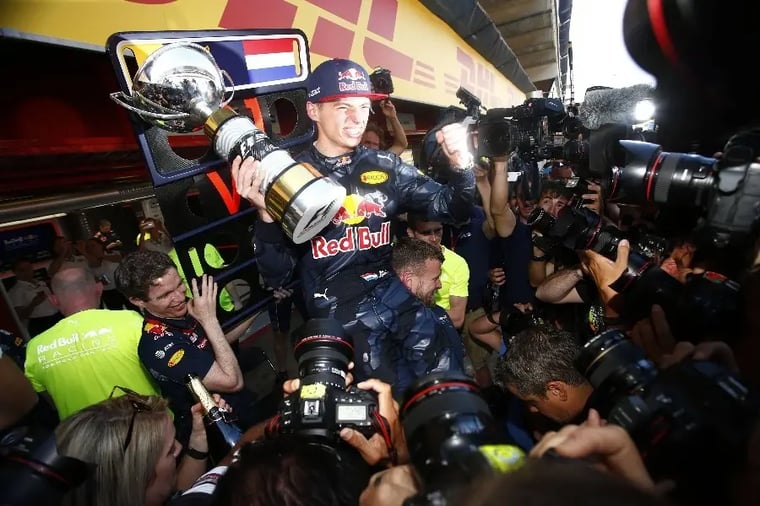
IMAGO / HochZwei / Motorsports: FIA Formula One World Championship 2016, race in Barcelona, No. 33 Max Verstappen.
Establishing himself at the front (2017–2020)
In 2017, Verstappen won the Malaysian and Mexican Grands Prix despite a run of technical issues in the first half of the season, finishing sixth in the standings. In 2018, he added more victories and frequent podiums — the base was set.
Red Bull’s new Honda partnership began in 2019 with a statement: Verstappen won in Austria, Germany, and Brazil, finishing third in the championship — his best overall result to that point. In 2020, he was a constant podium presence and won two races, taking third again in the Drivers’ Championship.
The first world title: 2021 showdown
With the RB16B, Verstappen fought a season‑long duel with Lewis Hamilton in 2021. He decided the Abu Dhabi finale in his favor after a late Safety Car and a last‑lap restart — his first world title and the first for a Dutch driver.
.webp?width=760&height=475&name=IMAGO_960x600%20(61).webp)
IMAGO / Every Second Media / FORMULA 1 FRENCH GRAND PRIX, 20 06 2021 Circuit Paul Ricard, Le Castellet, France on 20 June 2021 Max Verstappen (NED), Red Bull Racing RB16B celebrates winning with champagne spray on podium Sergio Perez (MEX)
Dominance and record years, 2022–2024
In 2022, he defended his title despite early‑season retirements, delivering a dominant campaign that included 15 wins — a new single‑season record at the time. His points haul and margin underlined the team’s performance level.
In 2023, he raised the bar again: ten consecutive Grand Prix wins, 19 victories overall, and 575 points — all single‑season records in a calendar of more than eight races. In 2024, he sealed a fourth straight Drivers’ Championship ahead of the season finale, clinching it early at the Las Vegas Grand Prix.
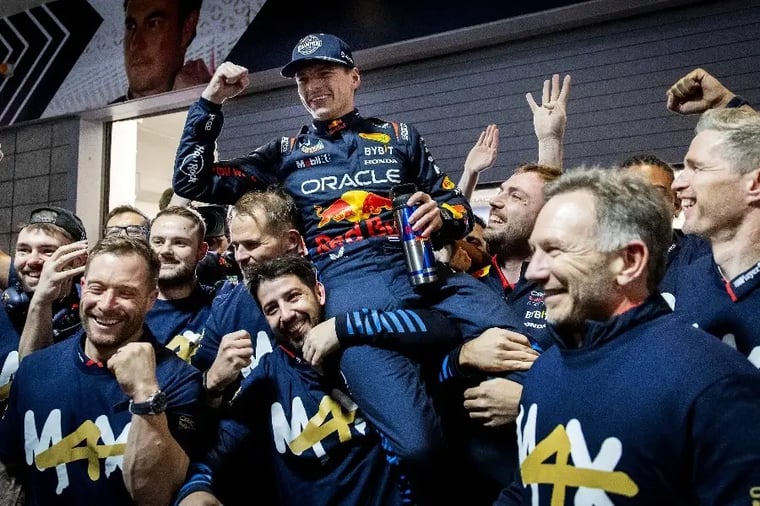
IMAGO / ANP / Max Verstappen (Red Bull Racing) celebrates winning his fourth world title with his team after the Las Vegas Grand Prix.
2025: narrow miss — runner‑up by two points
In 2025, Verstappen remained in the title fight to the end and won the season finale in Abu Dhabi. Lando Norris secured the championship by two points, and Verstappen finished second in the standings with 421 points.
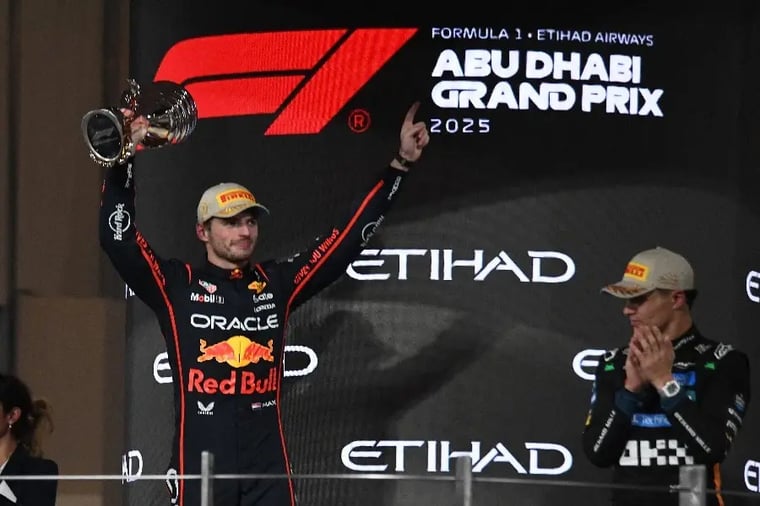
IMAGO / Jan Huebner / Motorsport FIA Formula 1, Abu Dhabi Grand Prix from left to right: Celebrating, joy over the victory Max Verstappen (Oracle Red Bull Racing) Car number 1 Lando Norris (McLaren) Car number 04.
Driving style, personality, and environment
On track, Verstappen is regarded as a relentless yet increasingly composed racer, noted for pace under pressure and strong consistency. The stricter interpretation against moving under braking in 2016 marked an early turning point in how his duels were assessed.
Verstappen grew up in a racing family; the “Oranje” fan base has shaped the atmosphere for years — especially at his home race in Zandvoort, which he won from 2021 to 2023. Privately, he lives in Monaco and became a father to a daughter in 2025.
Conclusion and outlook
With four world titles, multiple records, and sustained performance at the front, Verstappen has assembled a remarkable profile by age 28. The narrow loss in 2025 changes little about his status as the reference driver of recent years. His long‑term Red Bull contract runs through 2028, making further chapters at the front likely. What milestones — competitive and statistical — he adds next remains open.
IMAGO: Image Content and Licensing — concise and fact‑based
IMAGO works with an international network of partner photographers, agencies, and archives, providing image and video content across Sports, News, Entertainment, Creative, and Archival material. IMAGO has no in‑house photography and does not guarantee exclusivity; instead, it provides clear and flexible licensing models. These include Rights Managed, Royalty Free Classic, and Royalty Free Premium. Each license precisely defines how, where, and for how long content can be used; copyright remains with the respective photographer or agency.
For non‑editorial uses, Model or Property Releases are required where applicable; without these, use is editorial only. IMAGO supports filtering by license category and indicates release status in the metadata only for Creative (stock) images that may be used commercially; Editorial images do not contain release information in their metadata. Access is available via the webshop — either single purchases or credit packages — or through personal consultation with Sales Managers. If a client intends to extend an Editorial image for non‑editorial (commercial) use, the client is responsible for clearing any third‑party rights (e.g., depicted persons, trademarks, properties). Images are licensed for editorial use; commercial use requires a corresponding license (non‑exclusive).
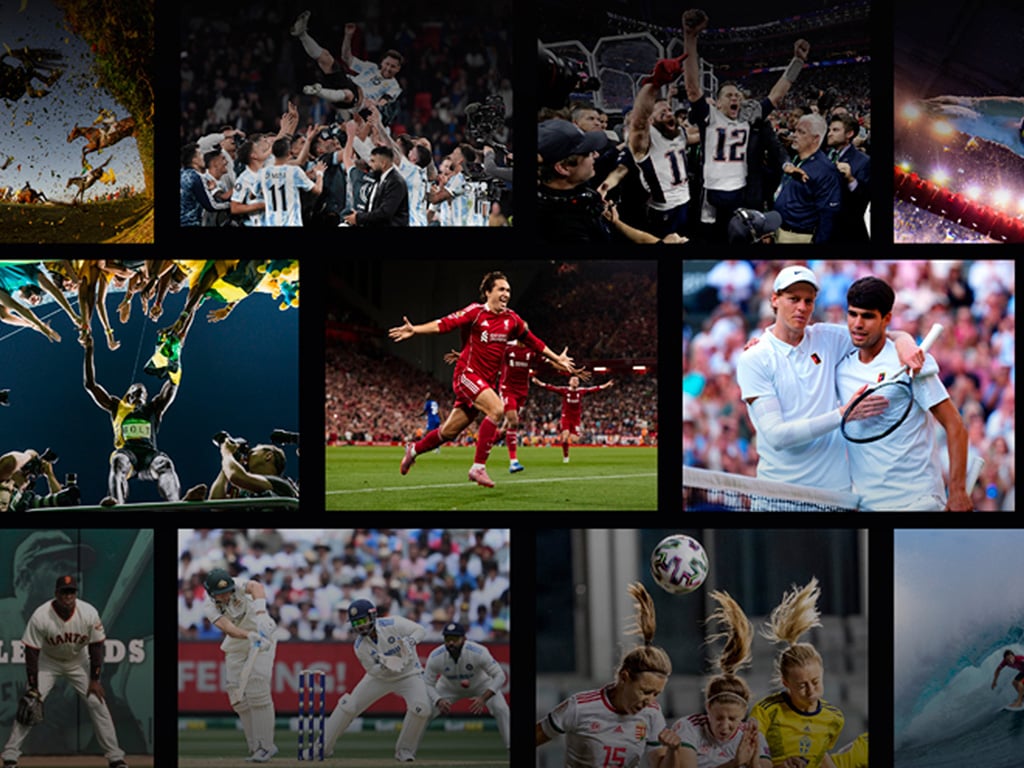
License Sports Images Tailored to Your Needs
Real-time editorial sports images across all major sports, including football, F1, tennis, and more, plus access to the largest editorial sports archives. Flexible licensing and fast support in Europe and worldwide.
Learn more