
Boxing is a sport where comparisons across generations are difficult: rules, weight classes, training methods, and the structure of world titles have changed repeatedly. Still, over decades, certain names become larger than their records — because they shaped rivalries, defined styles, and came to represent entire eras. This article offers a thematic sweep from the bare-knuckle transition to the modern multi-belt era and places key careers in context. It is aimed at sports desks, agencies, brands, creators, NGOs, and educational institutions that want to contextualize boxing history or tell it visually — for example in reporting, documentaries, Social Media, or teaching materials. As an international image and content platform, IMAGO works with a global network of partner agencies, photographers, and archives that document these moments and license them for clearly defined uses.

From current bouts to historic moments, we provide expert licensing support.
What makes a boxer “legendary” — beyond records?
The label “legendary” is not an objective award, but the result of performance, context, and impact. A dominant champion in a thin era is assessed differently from a titleholder who beats multiple elite opponents in quick succession. Add to that rule changes (for example, round counts), medical standards, weight limits, and the increasing professionalization of matchmaking.
For a robust evaluation, it helps to look at criteria that can be applied across weight classes and decades. These include: quality of opposition, title unifications or title defenses, adaptability in the ring, longevity, and influence on style and public perception. In practice, “legend status” often emerges where sports history and contemporary history intersect — in social debates, mass media, and global events.
From early days to world championships: When boxing became a global stage
Early professional boxing history is shaped by the transition from bare-knuckle fighting to the Queensberry rules. John L. Sullivan is a key figure of that phase: he won the heavyweight title under bare-knuckle rules in 1882, fought the last major bare-knuckle title bout in the U.S. in 1889 against Jake Kilrain, and then lost under Queensberry rules to James J. Corbett in 1892.
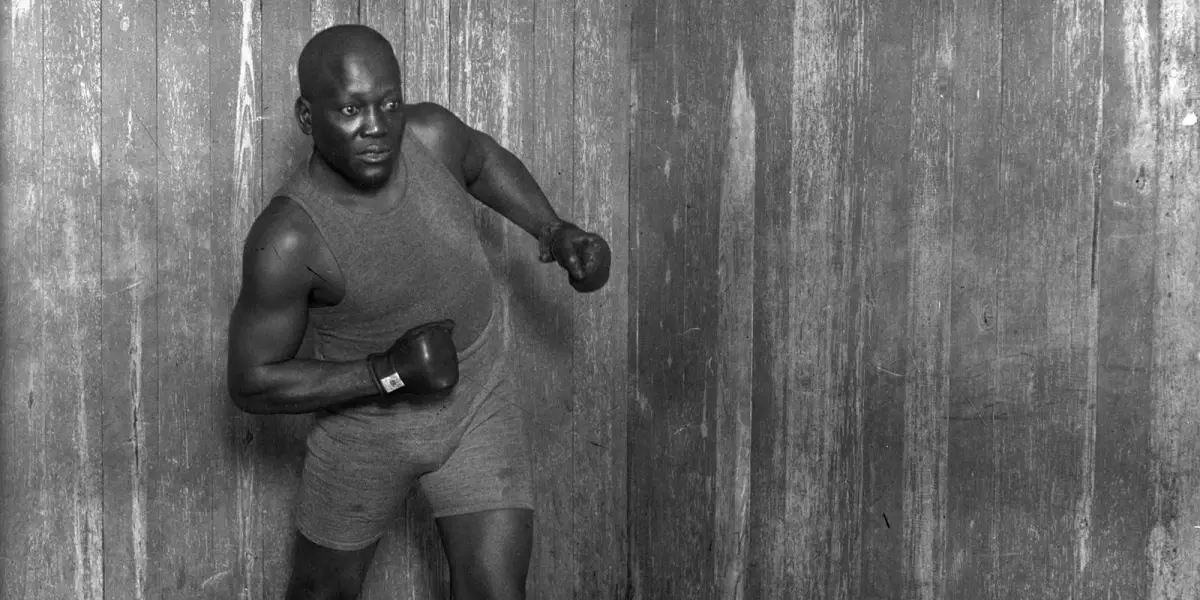
In that period, the sport became increasingly mediated — and politicized, especially where race and social hierarchy shaped public perception. Jack Johnson became the first Black heavyweight world champion and held the title in the early 20th century in an era marked in the U.S. by institutional segregation. His fights show how early boxing became a mirror of social conflict, long before pay-per-view and global marketing defined the sport.
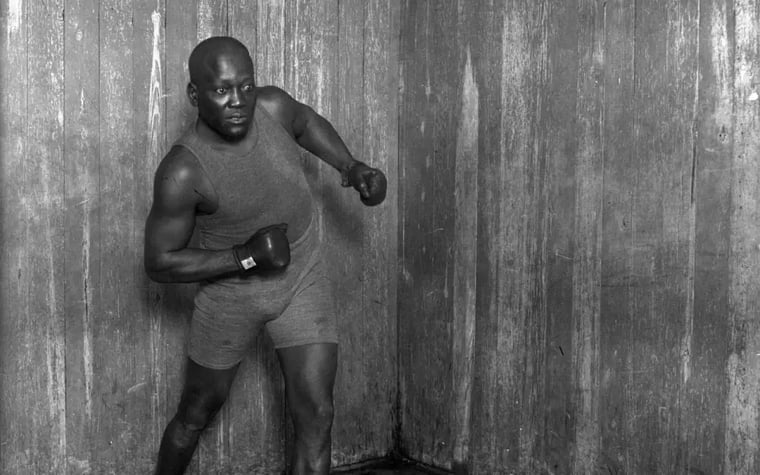
IMAGO / ZUMA Press Wire / Boxing legend Jack Johnson in an undated photo
Mastery across weight classes: Henry Armstrong as a historical outlier
Although the heavyweight division is often treated as the “premier class,” boxing legend-making has never been limited to it. An early statement came from Henry Armstrong, the only professional boxer to hold world titles in three weight classes simultaneously. That remains an exception because modern sanctioning-body structures, mandatory defenses, and scheduling make such overlap far harder.
Career highlights (Armstrong)
-
Simultaneous world champion in three weight classes (historically unique).
-
An example of an era in which activity and fight frequency were more central to a champion profile than they are today.
Armstrong illustrates a recurring theme: legends also emerge when fighters push the boundaries of weight classes — an idea that becomes central again in the “multi-division champion” era.
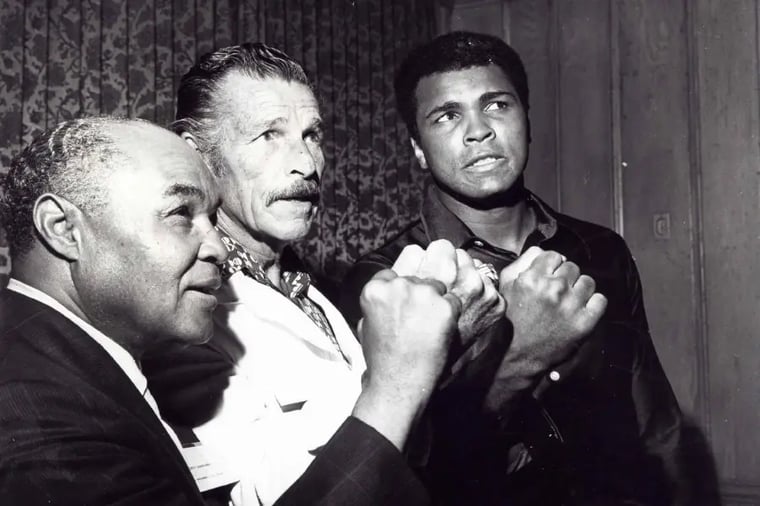
IMAGO / ZUMA Press Wire / MUHAMMAD ALI with Henry Armstrong 1947. Copyright: Globe Photos
The era of long reigns: Joe Louis and the champion as a norm
As boxing’s popularity grew, the ideal formed of a champion who defends for years and stabilizes the heavyweight division. Joe Louis was world champion from 1937 to 1949 and made 25 successful title defenses; this is widely cited as the longest reign in any weight class. His record is not only about numbers, but about a period in which a champion could be perceived as a lasting institution.
Career highlights (Louis)
-
Heavyweight world champion 1937–1949.
-
25 successful title defenses.
-
A stylistic reference point for “economical” boxing: precise, controlled, focused on clean scoring shots.
The Louis era shaped expectations: the heavyweight champion is not only supposed to win, but to structure the top of the sport over time.
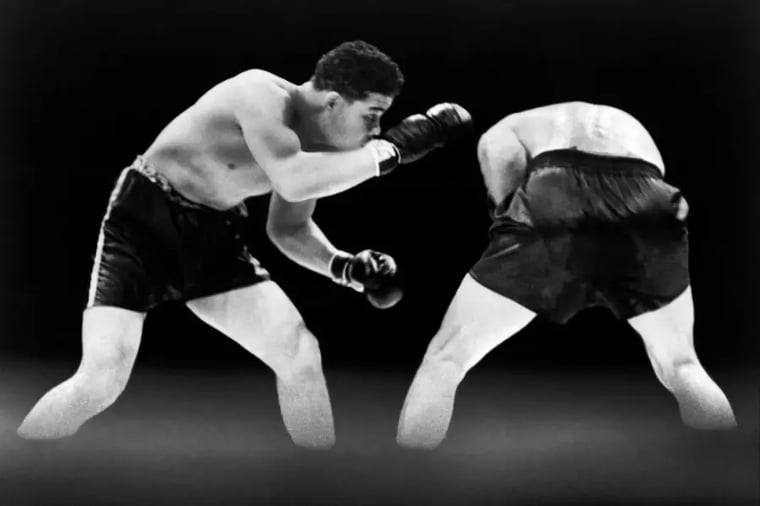
IMAGO / ZUMA Press Wire | American boxer Joe Louis looking for opening during boxing match with German boxer Max Schmeling, Yankee Stadium, Bronx, New York City, New York, USA.
Perfection as mythology: Rocky Marciano and the heavyweight unbeaten status
If Louis stands for reign, Rocky Marciano stands for the rare narrative of being unbeaten. He ended his career 49–0 with 43 knockouts and held the heavyweight title from 1952 to 1956. In heavyweight boxing, a perfect record remains unusual because single punches can end fights early, and decline with age is often punished immediately.
Career highlights (Marciano)
-
Heavyweight world champion 1952–1956.
-
Retired 49–0 (43 KOs).
-
A symbol of how strongly “unbeaten” status contributes to legend-building.
Marciano also highlights the limits of comparison: the question of opponent depth behind a perfect record is still debated — and that debate is part of boxing’s logic.
“Pound for pound” as a benchmark: Sugar Ray Robinson and the ideal of the complete boxer
In historical rankings, Sugar Ray Robinson is often used as a reference point for technical completeness. His long career extended to 1965, and his professional total is often cited at 201 bouts with 109 knockouts, alongside 19 losses. Numbers like these represent activity, versatility, and longevity — and explain why Robinson is frequently used as a benchmark beyond heavyweight.
Career highlights (Robinson)
-
201 professional fights, 109 knockouts.
-
Career spanning multiple decades through 1965.
-
Often cited as a reference in “pound-for-pound” comparisons.
Robinson marks a shift: boxing legends are not only “champions,” but become style standards against which later generations are measured.
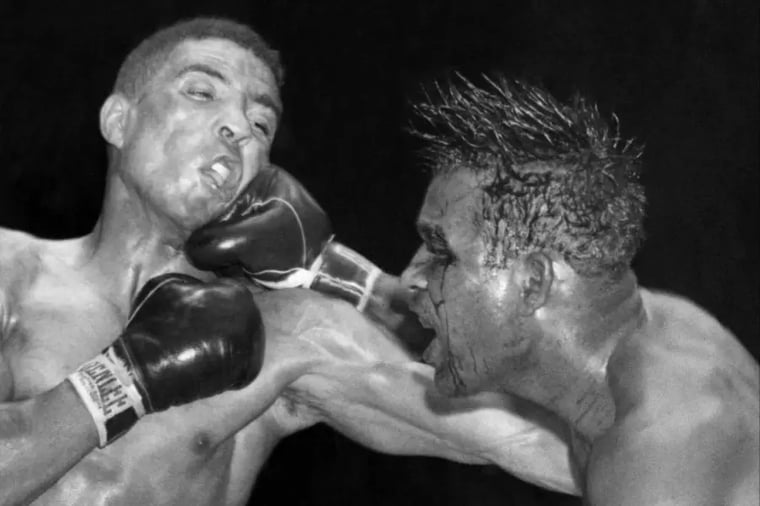
IMAGO / UIG / September 12, 1951: Sugar Ray Robinson throws a hard right to the jaw of middleweight champion Randy Turpin in the tenth round of their title bout at the Polo Grounds. The fight was stopped shortly thereafter, with Robinson awarded a TKO.
The 1960s and 1970s: Muhammad Ali as a sporting and public figure
With Muhammad Ali, heavyweight boxing reached a new cultural and media dimension. He is widely described as the first boxer to win the heavyweight championship three times, and his total of 19 successful heavyweight title defenses is frequently referenced. His career is also told through iconic constellations: rivalries, comebacks, political conflict, and a global symbolic status extending far beyond the ring.
A key sporting element was Ali’s ability to win in different phases: early through movement and distance control, later more through timing, rhythm changes, and experience. His legend is not built on being unbeaten, but on the combination of elite performance and public friction.
Career highlights (Ali)
-
Three-time heavyweight world champion.
-
19 heavyweight title defenses.
-
Olympic success as an amateur (commonly associated with Rome 1960).
-
Era-defining fights and rivalries in the 1970s.
Ali demonstrates a broader point: legend status emerges when a boxer dominates athletically and becomes a defining figure of his time.
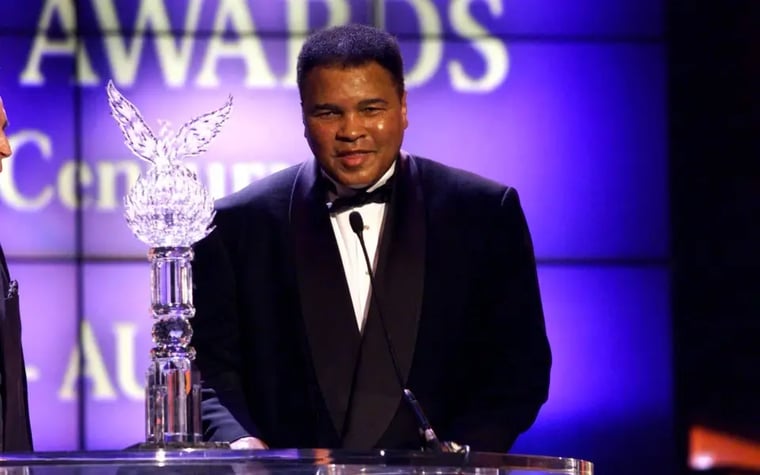
IMAGO / PPS / Muhammad Ali (USA) was named Combat Sports Athlete of the Century and honored with a crystal trophy at the World Sports Award 1999 (Men’s Boxing), Athlete of the Century, Millennium Selection, gala ceremony, awards event, single image, Vienna State Opera, Vienna.
Rivalry as a driver: Joe Frazier and the counter-image to the superstar
Ali’s era is difficult to understand without Joe Frazier. He held the heavyweight championship from 1970 to 1973. In public perception, he was often framed as Ali’s opposite: less showmanship, more pressure fighting, physical presence, constant body work.
Career highlights (Frazier)
-
Heavyweight world champion 1970–1973.
-
Central figure in the major heavyweight matchups of the 1970s.
Frazier shows how rivalries shape legends: not only the winner endures, but also the opponent who sets the standard.
George Foreman: Power, defeat, comeback — and a late-career record
George Foreman combines two classic patterns of legend-making: early dominance and late return. He regained the world title at age 45 by knockout against Michael Moorer, roughly two decades after first winning the heavyweight championship — a rare feat in a division where age typically carries a steep cost.
Career highlights (Foreman)
-
Olympic gold and early heavyweight championship success.
-
A landmark heavyweight bout against Ali as a fixed point in boxing history.
-
World champion at 45, a defining late-career record in heavyweight boxing.
Foreman supports a modern reading of greatness: not only prime performance, but also adaptation and longevity.
The 1980s at middleweight: “Four Kings” and the standard of elite matchups
While heavyweight often dominates attention, the 1980s middleweight scene is widely regarded as one of boxing’s densest quality eras. Sugar Ray Leonard won Olympic gold as an amateur (1976) and became a multi-division champion, known for mobility and finesse.
Roberto Durán represented pressure, body work, and technical toughness; he is widely credited as a world champion across four weight classes. Thomas Hearns is commonly described as a long-range puncher with elite power and is often credited with titles across five weight classes. Marvin Hagler became a symbol of stability and dominance at middleweight, until his loss on points to Leonard in 1987 closed that chapter.
Career highlights (Leonard, Durán, Hearns, Hagler — selected)
-
Leonard: Olympic gold 1976; world champion in multiple divisions.
-
Durán: world champion in four weight classes.
-
Hearns: titles in five weight classes.
-
Hagler: defined middleweight until the Leonard fight in 1987.
This era shows why “legendary” is often tied to specific fights: when elite fighters test each other at or near their peak, a density emerges that later eras rarely replicate.
The 1990s: Title unification, global commercialization — and heavyweight as drama
The 1990s made the title picture more complex: more sanctioning bodies, more belts, more unification logic. Evander Holyfield is central here because he is widely credited as the first undisputed cruiserweight champion to also become an undisputed heavyweight champion, and as the first fighter to win a major heavyweight title four times. His fights against Mike Tyson and Lennox Lewis are among the most discussed events of the decade.
Lennox Lewis is often described as the last undisputed heavyweight champion before the modern four-belt fragmentation; he is also commonly cited as the first Briton since the 19th century to hold undisputed status at heavyweight. His unification with Holyfield was settled by a unanimous decision in their 1999 rematch.
Mike Tyson: Early dominance and the cost of expectation
Few names are as closely associated with the image of a “dangerous” heavyweight as Mike Tyson. He became the youngest heavyweight world champion on November 22, 1986, by knockout against Trevor Berbick, and later unified major belts in the late 1980s. His legend is shaped by athleticism, aggression, hand speed — and by how quickly public narratives can flip once dominance breaks.
Career highlights (Tyson)
-
Youngest heavyweight world champion (Nov. 22, 1986).
-
Recognized champion across major sanctioning bodies in his late-1980s peak phase.
-
A clear example of how athlete narratives intensified in the TV and PPV era.
Tyson’s career underlines that legend status in boxing is not defined only by wins, but also by expectation pressure and public interpretation of control, risk, and downfall.
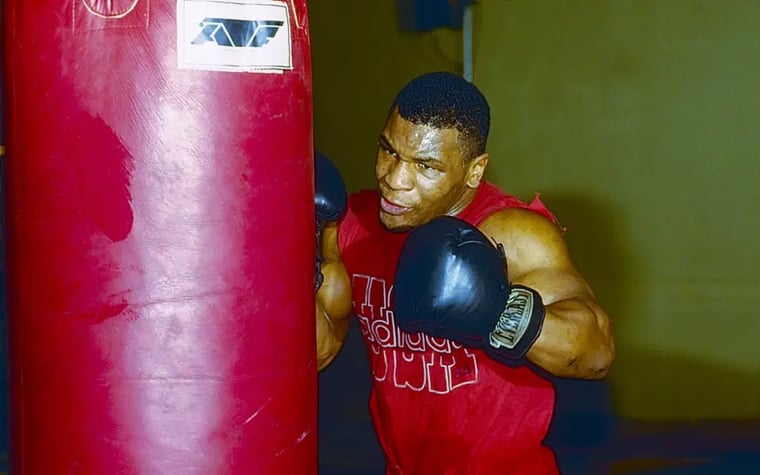 IMAGO / PCN Photography / Paul J Sutton / Boxing Mike Tyson training at Cus D Amatos gym in Catskill, NY in 1986.
From “showcase” events to multi-division champions: De La Hoya, Mayweather, Pacquiao
In the 2000s, the sport’s focus often shifted toward pay-per-view economics, “superfights,” and crossover marketing. Oscar De La Hoya, as an Olympic gold medalist and multi-division world champion, became a defining figure of that period and is commonly credited with titles across six weight classes.
Floyd Mayweather Jr. is frequently associated with defensive precision and the economics of “avoid getting hit, land clean shots.” He is commonly credited with world titles in five weight classes. His unbeaten professional record became part of his public narrative, also because he often prioritized control over risk.
Manny Pacquiao represents the opposite model: weight movement as a career principle. He is widely described as the only boxer to win world titles in eight weight classes and was inducted into the International Boxing Hall of Fame (class of 2025).
Career highlights (Mayweather & Pacquiao — selected)
-
Mayweather: world champion in five weight classes.
-
Pacquiao: world titles in eight weight classes; International Boxing Hall of Fame inductee.
This period shows how the definition of “greatness” shifted: not only belts matter, but also movement across divisions, event economics, and the ability to remain relevant over long stretches.
The Klitschko era: Heavyweight stability and the end of a streak
In heavyweight boxing, Wladimir Klitschko shaped expectations for years through structure, discipline, and a controlled style. His long winning streak ended in 2015 with a loss to Tyson Fury, and he later retired with a record of 64 wins and 5 losses.
This phase matters because it shows how legend-making can also be built on stability: less chaos, more system. At the same time, demand grew for a stylistic break — and therefore for figures who made heavyweight boxing feel unpredictable again.
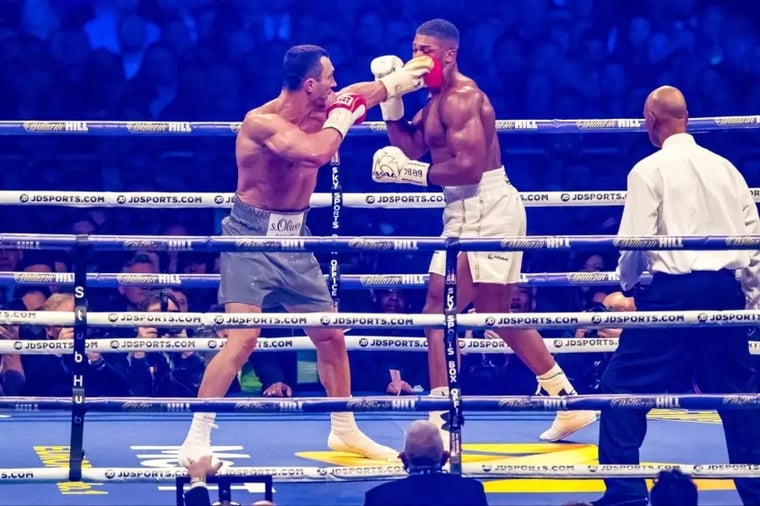
IMAGO / Eibner / KOENIG / Anthony Joshua vs Wladimir Klitschko, Boxen, 29.04.17 London
Tyson Fury: Lineal legitimacy, comebacks — and the defeats to Usyk
Tyson Fury is one of those figures because he combined size, mobility, and tactical variation in an uncommon way. His win over Klitschko in 2015 ended a long championship run and reshaped the heavyweight hierarchy. In the following years, Fury’s rivalry with Deontay Wilder became a defining heavyweight series.
For an up-to-date assessment, one point is central: Fury is not the undisputed champion of the present. Oleksandr Usyk defeated Fury in May 2024 by split decision to become the first heavyweight champion of the modern four-belt era to hold all major titles at once, and then won the rematch in December 2024 by unanimous decision. In current biographical summaries, Fury is listed as a former lineal and WBC heavyweight champion, with a record of 34–2–1.
Career highlights (Fury)
-
The 2015 win over Klitschko was a turning point in heavyweight boxing.
-
The Wilder rivalry/trilogy was a defining heavyweight series of the 2010s/2020s.
-
Two title fights against Usyk was benchmark contests of modern heavyweight history.
-
Professional record in major summaries: 34–2–1.
Fury’s legend status is therefore not built on flawless dominance, but on a mix of style, major fights, and a career arc that — as with many heavyweights — includes sharp peaks and reversals.
Oleksandr Usyk as a modern benchmark: Why the Fury era cannot be told in isolation
If an article runs “through Tyson Fury,” it also has to explain why Fury does not stand alone. Usyk’s 2024 win is framed as a historic step because it unified the four major heavyweight belts — the first undisputed champion of the four-belt era. This matters for evaluating modern heavyweights, since today’s title structures are more fragmented than in the eras of Ali or Louis.
In the present, legend-making is also more “networked”: rankings, mandatory defenses, rematch clauses, and event locations influence who fights whom, and when. That makes a complete title pathway — as in Usyk’s case — especially significant.
Women’s boxing: From a footnote to a stage for legends
A broad survey of “the most legendary boxers” is incomplete if it leaves out women’s boxing. Professionalization arrived later and under different conditions, but the evaluation principles are comparable: unification, movement between divisions, opponent depth, and international impact.
Claressa Shields is widely credited with becoming the first undisputed champion in three weight classes, adding heavyweight to prior achievements, and she is also associated with Olympic gold medals in 2012 and 2016. Katie Taylor is frequently cited as a key figure for the sport’s visibility in Europe and Ireland and is associated with Olympic gold in 2012.
Career highlights (Shields & Taylor — selected)
-
Shields: undisputed in three weight classes.
-
Shields: Olympic gold in 2012 and 2016.
-
Taylor: Olympic gold in 2012.
This underlines a contemporary reality: boxing legend-making is no longer exclusively male — and modern sports history requires both lines to be told together.
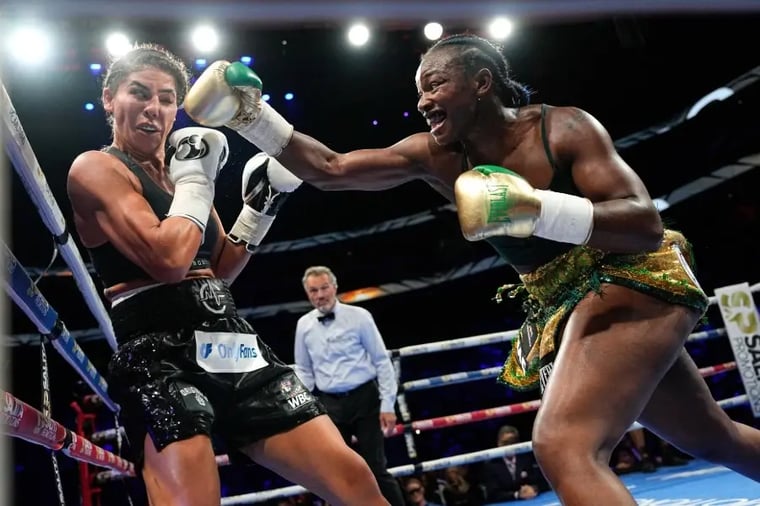
IMAGO / ZUMA Press Wire / June 3, 2023, Detroit, Michigan, USA: Claressa Shields throws a punch against Maricela Cornejo during their Middleweight Championship fight at Little Caesars Arena.
Images, archives, and rights: How boxing history is documented and used
Boxing relies heavily on iconography: ring photography, press images, historical archives, and broadcast stills shape how careers are remembered. For any publication, one principle applies: a license grants usage rights, not ownership of copyright. In practice, lawful use depends on whether the material is used editorially or commercially, and on the underlying rights chain behind an image.
As an image and content platform, IMAGO works with partner agencies, photographers, and archives and provides clear licensing models that define scope and territory of use. This is particularly relevant when content appears not only in classic articles, but also in Social Media, documentaries, educational products, or campaign contexts.
Why the Greatest Boxers Are More Than Their Records
The path from John L. Sullivan through Jack Johnson, Joe Louis, Robinson, Marciano, and Ali to Fury shows that “legendary” rarely means only “strong.” Legends are fighters who define their era — through titles, opposition, style, or social impact. At the same time, comparing across decades makes clear how much boxing has changed: from relatively linear title lines to complex multi-belt structures, from local arenas to global events.
Anyone discussing “the greatest of all time” today has to do two things at once: place sporting facts accurately and explain the context that gave those facts meaning. That is the appeal of boxing history — and the reason why Ali, Louis, Robinson, or Fury remain reference points in future debates.

License Sports Images Tailored to Your Needs
Real-time editorial sports images across all major sports, including football, F1, tennis, and more, plus access to the largest editorial sports archives. Flexible licensing and fast support in Europe and worldwide.
Learn more