IMAGO / Eibner / EP_jat | Lamborghini Huracán GT3, Team Konrad Motorsport (GER) during a nighttime pit stop

Since 1970, the 24‑Hour Race at the Nürburgring has ranked among the most demanding endurance tests in motorsport. From the outset, professionals and privateers have shared the grid — a hallmark that continues to define the event. The blend of the Nordschleife and sections of the Grand Prix circuit, the lap length, and the Eifel weather shape its character and drama. At the same time, the race is a stage for engineering, strategy, and teamwork — from manufacturer programs to ambitious private entries. Since the inaugural win by Hans‑Joachim Stuck and Clemens Schickentanz, the competition has steadily professionalized without losing its open spirit.
Origins and Evolution
The first edition took place on June 27–28, 1970, setting the tone for a mix of grassroots racing and elite performance. In 1973, the race featured its only “night rest” to date — an eight‑hour pause from midnight to morning. The event was canceled in 1974 and 1975 due to the oil crisis, and again in 1983 for construction related to the new Grand Prix circuit; since 1984 it has run on the combined Nordschleife/GP layout. A media milestone followed in 1989 with a continuous 24‑hour television broadcast.
The Circuit
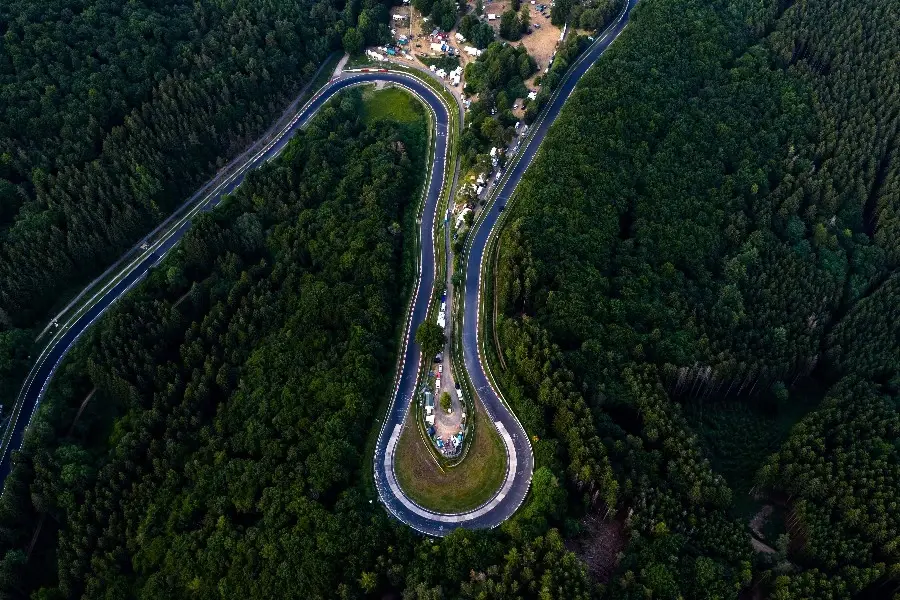
Today’s configuration measures 25.378 km per lap, combining the historic Nordschleife with parts of the modern GP track — a lap as long as it is varied. The Nordschleife is regarded as the longest permanent race circuit in the world and officially counts 73 corners; gradients reach up to 17% and descents up to 11%, pushing drivers and machinery to the limit. Its “Green Hell” nickname was coined by Formula 1 legend Jackie Stewart. Fast sections, blind crests, and narrow passages make every lap demanding — especially when the weather turns.
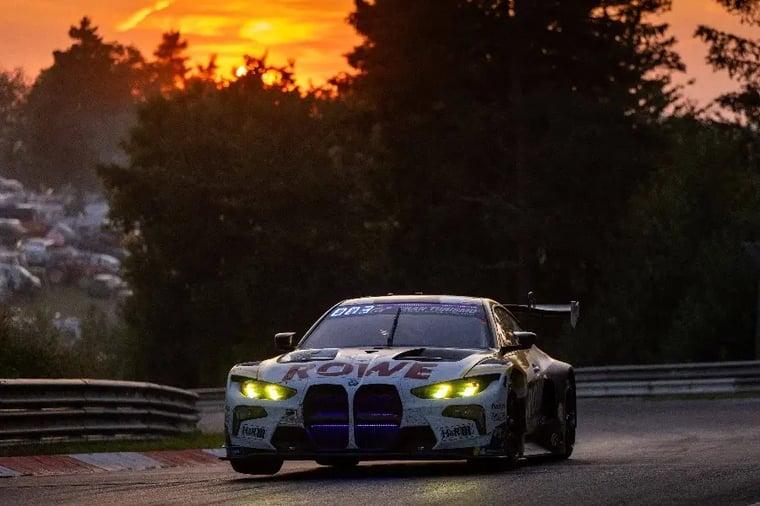
IMAGO / Eibner / Memmler in the sunset at Galgenkopf, GER, ADAC Ravenol 24 Hours Race Nuerburgring 2025
Cars and Classes
The grid features touring cars and GT machinery across a wide range — from near‑series cars to full GT3. The top class is SP9, aligned with FIA GT3 regulations; it typically decides the overall victory. Entry numbers are capped at roughly 170 cars, though historic peaks have exceeded 200 starters (224 entries in 2007). The breadth of the field and the resulting speed differentials shape the race’s flow and constant lapping traffic.
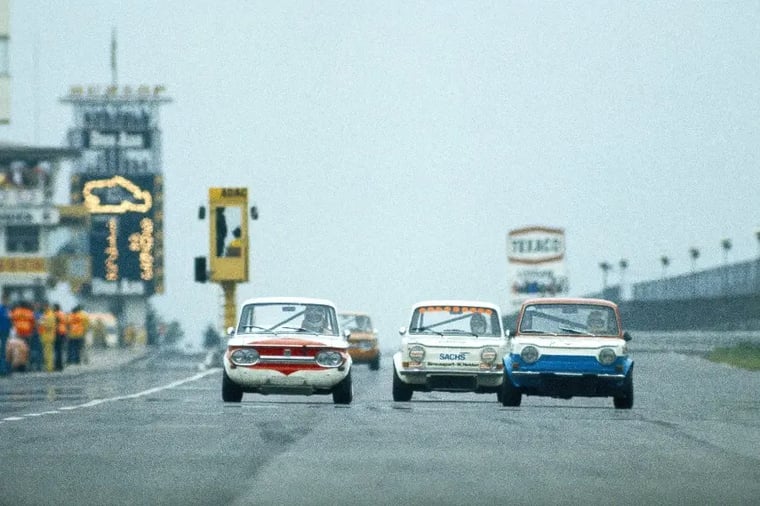
IMAGO / Thomas Zimmermann / NSU 1200TT + Simca 1000 on the start-finish straight of the Nürburgring Nordschleife during the 6-hour race in 1970.
Teams and Drivers
Factory‑supported contenders line up alongside strong privateer squads — a distinctive feature of the event’s profile. Manthey Racing (Porsche) led the 2000s with seven overall wins through 2021; in 2024, Phoenix Racing (Audi) drew level with its seventh victory. The drivers’ record of five overall wins is shared by Timo Bernhard, Pedro Lamy, and Marcel Tiemann. Sabine Schmitz set a milestone by winning in 1996 and 1997 — the first woman to take overall victory.

IMAGO / Eibner / Memmler / Thierry Vermeulen (Netherlands, Emil Frey Racing, Ferrari 296 GT3, 69) at the start of the race heading towards the first corner ahead of Jack Aitken (United Kingdom, Emil Frey Racing, Ferrari 296 GT3, 14).
Technology and Strategy
Twenty‑four hours of running in the rhythm of refueling, tire changes, and repairs is a stress test for powertrains, brakes, and suspension. The long lap has strategic consequences: unscheduled pit stops are costly, so teams weigh risks and consolidate repairs where possible. To improve night‑time visibility for class leaders moving through traffic, the fastest 30 cars carry blue identification LEDs — an established safety feature.

Weather and Interruptions
Eifel weather remains the great unknown. In 2016, hail forced an early interruption — the race later produced a 5.697‑second winning margin, the closest finish on record. In 2021, dense fog triggered a neutralization lasting nearly 14.5 hours. In 2024, persistent fog led to an early termination and further shortened the effective green‑flag running. In 2025, a temporary power outage paused proceedings for about two hours before the race concluded as scheduled.

IMAGO / speedshot racing cars on the Nürburgring Nordschleife in wet track conditions 24h race 2025 Nürburgring
Fan Culture and Atmosphere
Hundreds of thousands line the track each year — about 250,000 spectators were counted in 2011, and some 280,000 marked a new high in 2025. Traditional camping zones spring up along the Nordschleife, with established fan sites and long‑standing camps; the organizer opens designated areas for the 24h weekend. The blend of proximity to the action, campfire culture, and continuous on‑track running is central to the race’s appeal.
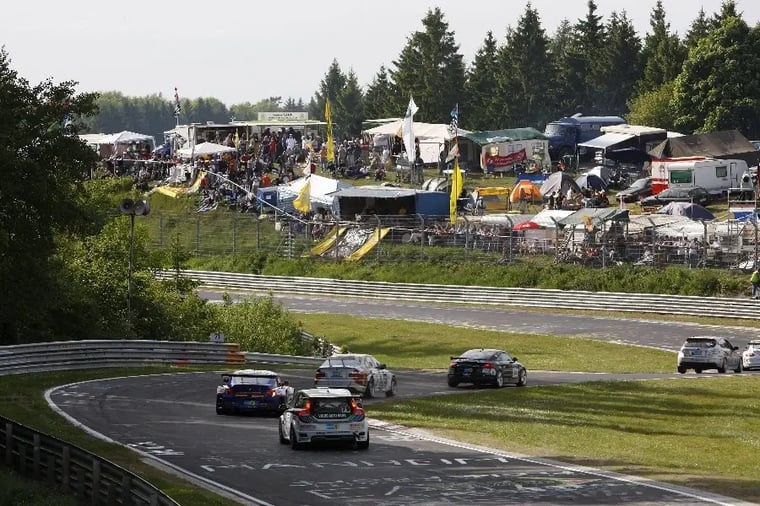
IMAGO / HochZwei/Suer Motorsport fans with their tents at the ADAC Zurich 24h Race 2009 at the Nürburgring Motorsport Men ADAC Zurich 24h Race 2009, Endurance, Endurance race, Car race, 24 hours, Total Nürburgring Nürburg
Economic Impact
Race week fills hotels, guesthouses, and campgrounds across the region and engages a wide range of service providers in logistics, catering, and event operations. Manufacturers and suppliers present technologies to a large audience, while the circuit serves as a “laboratory” for durability and innovation. The event’s reach supports tourism and the wider motorsport ecosystem well beyond the weekend itself.
Media Presence
Live coverage has deep roots and broad reach: in 1989, the entire race was broadcast for 24 hours for the first time. In 2025, NITRO set an official world record with 27 hours and 45 minutes of continuous live sports broadcasting; in parallel, the official livestream drew six‑figure concurrent audiences. Multi‑platform formats and social media coverage make the event accessible to viewers around the world.
Sporting Milestones (Selection)
In 2014, the winners completed 159 laps for a distance record. In 2016, the race was decided on the final lap with the narrowest margin in history. In 2023, Ferrari celebrated the first overall win for a Ferrari GT3 at the Ring; in 2024, thick fog led to an early end. In 2025, ROWE Racing won with the BMW M4 GT3 — BMW’s 21st overall victory at the 24h Nürburgring.
Conclusion
The 24‑Hour Race at the Nürburgring unites tradition and the present day: a singular circuit, an open entry culture, and a crowd that actively shapes the event. Weather, traffic, and strategy create a competitive environment that rarely forgives mistakes and rewards consistency. For teams, it is both a proving ground and a prestige platform; for fans, it is a festival with a distinctive atmosphere. Recent developments — from record attendance to media milestones — show how vibrant this endurance classic remains.
IMAGO: Image Content and Licensing — concise and fact‑based
IMAGO works with an international network of partner photographers, agencies, and archives, providing image and video content across Sports, News, Entertainment, Creative, and Archival material. IMAGO has no in‑house photography and does not guarantee exclusivity; instead, it provides clear and flexible licensing models. These include Rights Managed, Royalty Free Classic, and Royalty Free Premium. Each license precisely defines how, where, and for how long content can be used; copyright remains with the respective photographer or agency.
For non‑editorial uses, Model or Property Releases are required where applicable; without these, use is editorial only. IMAGO supports filtering by license category and indicates release status in the metadata only for Creative (stock) images that may be used commercially; Editorial images do not contain release information in their metadata. Access is available via the webshop — either single purchases or credit packages — or through personal consultation with Sales Managers. If a client intends to extend an Editorial image for non‑editorial (commercial) use, the client is responsible for clearing any third‑party rights (e.g., depicted persons, trademarks, properties). “Images are licensed for editorial use; commercial use requires a corresponding license (non‑exclusive).”
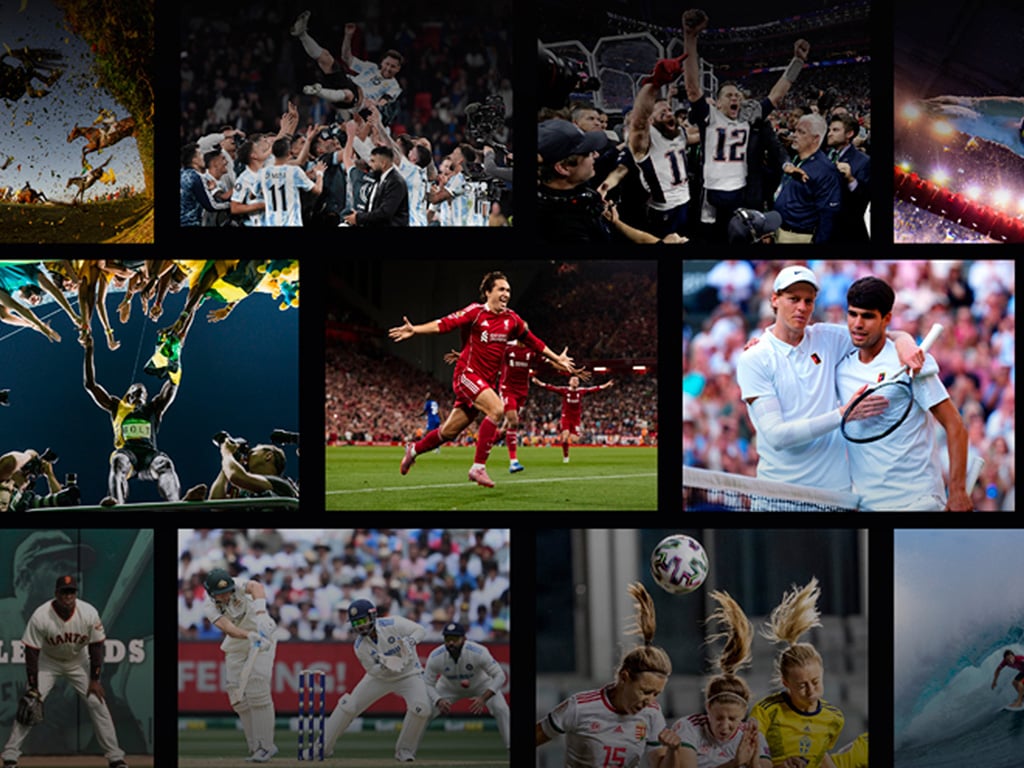
License Sports Images Tailored to Your Needs
Real-time editorial sports images across all major sports, including football, F1, tennis, and more, plus access to the largest editorial sports archives. Flexible licensing and fast support in Europe and worldwide.
Learn more