
Brief overview: The men’s World Cup has been the world’s most important football tournament since 1930. This article examines its origins, the tournament format, its development over the decades, sporting and social significance, economic dimensions as well as controversies and offers a guide to legally secure licensing of images via IMAGO.
The FIFA Men’s World Cup is the most significant tournament in international football. Since its first edition in 1930, the World Cup has grown into a global mega-event that inspires billions of people while simultaneously sparking profound social, economic and political debates. This article provides a comprehensive overview of the history of the FIFA Men’s World Cup, explains the structure and format of the tournament, traces the development of the World Cup over almost a century and examines the impact of the tournament on sport, society and the economy. It also discusses FIFA World Cup controversies to provide a balanced picture. For professional users such as editorial offices, brands, agencies, educational institutions and NGOs, the article offers background knowledge, context and practical advice on image licensing via IMAGO.
From the idea to a global event
In the 1920s, the vision of an international football championship matured. Jules Rimet, then president of the world governing body FIFA, in particular pushed the project forward and saw football as the universal language of a global community. In 1930, Uruguay, which had previously dominated the Olympic football tournaments, invited the world to Montevideo. Despite technical challenges and political tensions during this interwar period, teams from Europe and the Americas made their way to South America. Uruguay covered the travel costs of the participating teams, scheduled the games in newly built stadiums and won the final against Argentina 4–2. The success of the first tournament laid the foundation for a regularly held world championship, which has since been held at four‑year intervals. The history of the FIFA Men’s World Cup therefore begins as an experiment and quickly develops into the most important competition in world football.
Organizational structure and tournament format
The structure and procedure of the World Cup are decisive for understanding the competition. The World Cup is organized by the world football association FIFA, which is also the organizer and marketer of the tournament. The finals are held every four years, usually in June and July, and are always awarded to a different host country. Until 2022, 32 teams took part; from 2026, the field will be expanded to 48 teams, giving more nations the chance to participate.
Qualification and draw
Qualification extends over several years: within the six continental confederations (UEFA, CONMEBOL, CONCACAF, AFC, CAF, OFC), the associations play out their participants, with the allocation of starting places based on a points system and political decisions. Host countries are traditionally automatically qualified. After qualification is completed, the qualified teams are divided into groups. In the tournaments up to 2022, the preliminary round consisted of eight groups of four teams each, followed by knockout rounds from the round of 16 to the final. With the expansion to 48 teams, a new format with more groups, shorter group phases and additional knockout games is being introduced – a milestone in World Cup evolution.
Awarding of the hosting rights
The choice of host country is made through a complex bidding process. National associations prepare dossiers presenting infrastructure, security, sustainability, economic viability and social impacts. The members of the FIFA Council then vote on the bids. In the past, several tournaments were hosted by individual countries (Brazil 2014, Russia 2018), while 2026 will see the first time that the three countries USA, Canada and Mexico will jointly host. The award is politically contested and always accompanied by debates about corruption, human rights and ecological sustainability – aspects that are examined more closely in the Controversies section.
The trophy and its symbolism
The winning trophy is a central symbol. From 1930 to 1970, the Jules Rimet Trophy was awarded, named after the FIFA president who initiated the tournament. After Brazil became world champion for the third time in 1970, this trophy went permanently into Brazilian possession. Since 1974, the FIFA World Cup trophy has been awarded – a golden cup showing two human figures holding up the globe. The original remains in FIFA’s possession; the winners receive a gold‑plated replica. The trophy symbolizes not only sporting triumph but also international understanding that goes beyond the tournament.

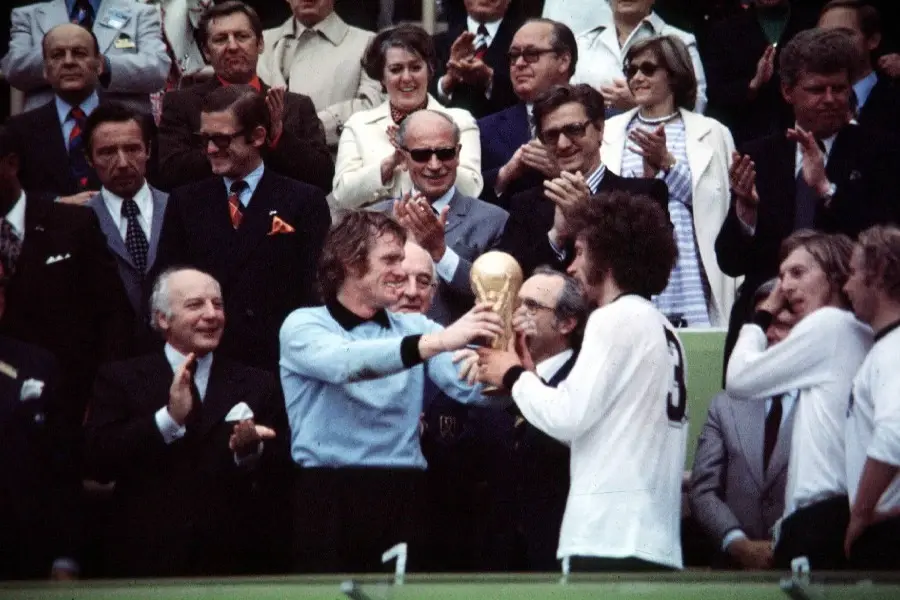
IMAGO / Kicker/Eissner, Liedel / Goalkeeper Sepp Maier (West Germany) with the FIFA World Cup on his head Football World Cup Men, World Championship 1974, FRG Single image Munich Enthusiasm, Joy.
Development and evolution over the decades
The history of the World Cup reflects political and cultural upheavals as well as the development of football itself. This section divides the history of the FIFA Men’s World Cup into decades to illustrate key events and changes.
1930s to 1950s: Building years and first stars
The early years were characterized by pioneering work. Uruguay (1930) and Italy (1934, 1938) dominated a European‑South American stage. Italy, with its defensive “Catenaccio,” became a two‑time title holder. The 1938 World Cup in France saw television technology used for the first time; parts of the tournament were broadcast live, but only to a few French cities. World War II interrupted the World Cup series; the tournaments of 1942 and 1946 were cancelled. It was not until 1950 that the tournament was held again, in Brazil. The legendary final at the Maracanã, in which Uruguay beat the host after trailing 2–1, went down in history as the “Maracanazo.” The 1954 World Cup in Switzerland brought the “Miracle of Bern,” when the Federal Republic of Germany triumphed 3–2 against the seemingly invincible Hungarian team. The early tournaments laid the foundations for how dramatic games become national myths and are etched in collective memory.

IMAGO / Schirner Sportfoto / Football World Cup in Uruguay Final Uruguay - Argentina 4:2 (1:2) B.z. Entrance of the Uruguay team with, among others, Captain Jose Nasazzi (right) and Jose Leandro Andrade (center). 30.07.1930 in Montevideo (Centenario Stadium) - Uruguay.
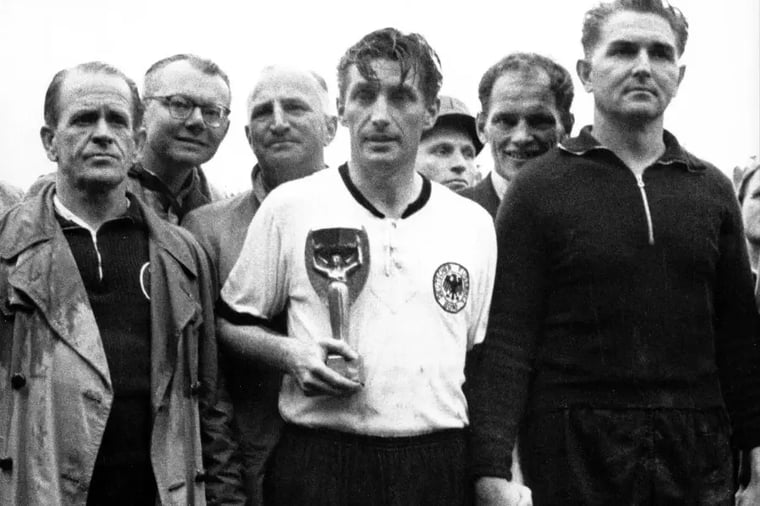
IMAGO / Ferdi Hartung / West Germany, World Champion 1954, from left: national coach Sepp Herberger, Fritz Walter with the Jules Rimet Trophy, and goalkeeper Toni Turek.
1960s to 1980s: Globalization and the rise of icons
The 1960s and 1970s were characterized by the increasing professionalization of football. Brazil won 1958 and 1962 with a technically outstanding team led by Pelé, who in 1958, at the age of 17, became the youngest world champion. In 1966, England won its only title at Wembley Stadium; the final against Germany is remembered because of the disputed “Wembley goal.” In 1970 in Mexico, Brazil under the leadership of Pelé once again enchanted the world; the final against Italy (4:1) is regarded by many as the culmination of offensive football.
The 1970s brought further developments: in 1974, the finals were held in Germany for the first time, and the Federal Republic of Germany won its second world championship thanks to players like Franz Beckenbauer, Gerd Müller and Paul Breitner. The new FIFA trophy was also presented for the first time in this tournament. In 1978, the tournament was held under the shadow of a military dictatorship in Argentina; nevertheless, the host nation won its first title. The expansion to 24 teams in 1982 as well as the introduction of the group stage in the second round reflect the growing worldwide interest. In 1986 in Mexico, Diego Maradona became the defining player; his “Hand of God” goal against England and the subsequent “Goal of the Century” are legendary to this day.
1990s to 2010s: Commercialization, expansion and European dominance
The 1990s marked a phase of strong commercialization. The 1990 World Cup in Italy saw Germany as the winner in a defensively oriented tournament. In 1994, the tournament took place in the USA for the first time; it set attendance records in the stadiums, although American enthusiasm for football was still developing. The final between Brazil and Italy was decided for the first time by penalties; Brazil won its fourth title. In 1998 in France, the field was expanded to 32 teams; the host country won the world championship for the first time, led by Zinedine Zidane. In 2002, Japan and South Korea jointly hosted the tournament – a first in Asia – and Brazil won for the fifth time.
In 2006, the World Cup returned to Germany and became known as a “summer fairy tale”: Italy secured the title, while the atmosphere in German cities was that of a folk festival. The 2010 tournament was held on African soil for the first time; in South Africa, Spain won its first title, characterized by possession‑based football and Andrés Iniesta’s winning goal in the final against the Netherlands. In 2014 in Brazil, Germany made history: in the semi‑final against Brazil there was a historic 7:1 (“Mineiraço”), and in the final Mario Götze scored the decisive goal against Argentina. In 2018 in Russia, France won its second title, and in 2022 Argentina around superstar Lionel Messi crowned themselves world champions for the third time after a dramatic final against France in Qatar.
2020s and future: reforms, new host locations and sustainability
The 2020s are characterised by the further development of the format and the growing discussion about sustainability and human rights. The expansion to 48 teams from 2026 will bring a new tournament structure and is part of FIFA’s efforts to allow more associations to participate. At the same time, the World Cup will increasingly be jointly organized by several countries in order to share the infrastructural burden and increase the chances of a bid. Joint bids from Europe, Africa and Latin America are being discussed for 2030. At the same time, the pressure from fans, associations and NGOs to comply with ecological and social standards is increasing – an important aspect in World Cup evolution.
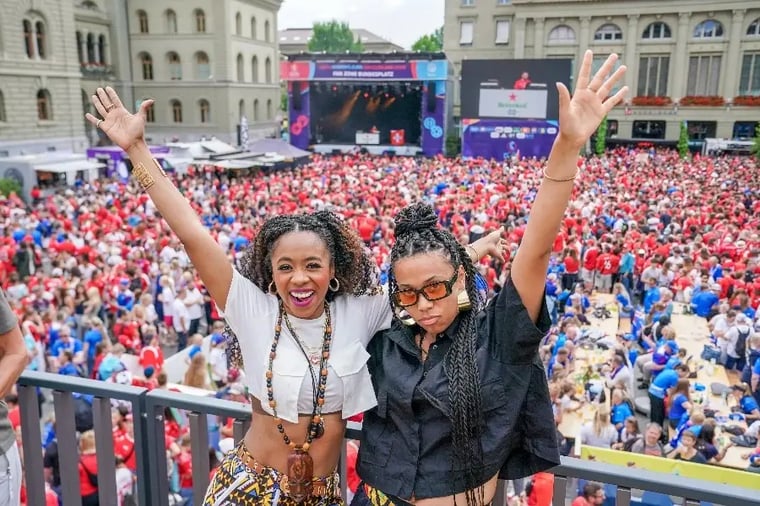
IMAGO / STEINSIEK.CH Bern, Switzerland, Europe: UEFA Women's EURO 2025, Fanzone Bundesplatz Two soccer fans cheering in front of a large red-blue crowd, lively atmosphere at the crowded Bundesplatz, fans in jerseys and with accessories, public viewing for the Women's Football European Championship, excitement, Switzerland as the host country, summer event, red fan wave, fan encounter in the heart of Bern.
Sporting and social impact of the tournament
The World Cup has brought forth countless sporting legends and accompanied social changes over almost a century. These dimensions underline the impact of the World Cup at different levels.
Sporting significance and records
Sportingly, the World Cup represents the highest level of international football: the best professionals in the world, national pride and national rivalries. Statistics show that Brazil is the most successful nation with five titles, followed by Germany and Italy with four each. France, Argentina and Uruguay have two titles each, while England and Spain have each won once. Miroslav Klose holds the record for most World Cup goals (16) and overtook Brazilian Ronaldo in 2014. Players like Just Fontaine (13 goals in a single tournament in 1958) and Roger Milla (oldest goal scorer, 1994) also set still valid marks.
The World Cup is a place of unforgettable games: from Maradona’s “Hand of God” in 1986 to the “Miracle of Bern” in 1954 to the 7:1 at the Mineirão in 2014, these moments shape the perception of the tournament over generations. They also become anchored in the collective memory through iconic images that condense emotions and drama.
Social impact and cultural significance
In addition to sporting competition, the World Cup plays a significant role as a social event. During the tournament weeks, a sense of community arises worldwide: public viewing, fan zones, large‑scale celebrations and national symbolism shape public perception. For host countries, the games can help solidify national identity or convey political messages. The “Summer Fairy Tale” 2006 in Germany is an example: after years of negative reporting, the country experienced a wave of enthusiasm and newfound national feeling.
At the same time, the tournament can make tensions and social conflicts visible. The “Ke Nako” of the 2010 World Cup (“It’s time”) stood for South Africa’s desire to present a new post‑Apartheid identity, while in 1978 in Argentina international criticism of the military dictatorship arose, which used the tournament for propaganda purposes. The social context thus flows into the perception of games and images; events on the pitch are closely linked to social issues.
Media presence and technological innovation
The role of the media in the World Cup is enormous. As early as 1954, parts of the tournament were broadcast on television; in 1970 in Mexico, it was the first World Cup to be broadcast worldwide in colour via satellite. Today, World Cup matches are omnipresent thanks to streaming, social media and 24‑hour coverage. The number of viewers increased accordingly: in 2018, around 3.57 billion people worldwide watched at least part of the games according to FIFA, and the finals reached live audiences of over a billion.
Technological innovations influence the sport itself and the media staging: goal line technology (since 2014), the Video Assistant Referee (VAR) (since 2018), half‑field cameras, data analyses and immersive 360‑degree recordings change the view of the game. For fans and editorial offices, this means an abundance of perspectives and sources of information, while for players and coaches new challenges arise.

IMAGO / Werner Schulze / Sepp Maier passes the trophy to Paul Breitner, award ceremony, World Champion, trophy, Men's World Cup 1974, Final, National Team, International Match, Germany - Netherlands 2:1, Group Olympiastadion Munich Happiness, Enthusiasm, Joy.
Economic dimensions – revenues and expenditures
The World Cup generates enormous revenues and is FIFA’s economic engine. In the 2019‑2022 cycle, the association took in around 7.5 billion US dollars according to its own figures, mainly from TV rights, sponsorship contracts and licensing. The revenues of the tournament finance both the organization of the World Cup and development programmes in the member associations. The prize money increases continuously; in 2022 the total prize pool was 440 million US dollars, of which 42 million went to the world champion.
For host countries, however, the economic effects are ambivalent. On the one hand, the World Cup brings international attention, attracts tourists and encourages investment in infrastructure such as stadiums, roads and airports. On the other hand, the costs are enormous. Brazil invested tens of billions in stadiums and infrastructure in 2014; protests against social injustice clouded the tournament. Qatar undertook long‑term infrastructure projects for 2022, including stadium air‑conditioning and expansion of local transport, which cost far in excess of 200 billion US dollars. The long‑term economic balance remains disputed and depends on factors such as sustainability, post‑use of stadiums and the general economic situation.
Controversies and debates – corruption, human rights and sustainability
No other sporting event is as focused on criticism as the FIFA World Cup. Over the course of the history of the men’s Football World Cup, numerous FIFA controversies became known. Some result from decisions of the world association, others from the political circumstances of the host countries.
Corruption scandals and awarding processes
The awarding of World Cups to host countries has been suspected of corruption for years. The awards for 2018 (Russia) and 2022 (Qatar) were accompanied by extensive revelations. US and Swiss authorities investigated several leading FIFA officials in 2015 on charges of bribery and money laundering. The investigations led to the resignation of then FIFA president Sepp Blatter and the conviction of several officials. Although FIFA has since tried to improve transparency, concerns remain about the integrity of the awarding process.
Human rights and working conditions
The selection of Qatar as host for 2022 triggered criticism of the working conditions of migrant workers. Reports from human rights organizations documented poor working conditions, unpaid wages, heat exposure and lack of rights for migrant workers. Since 2010, thousands of workers are said to have been working on construction sites in Qatar according to international media; despite some reforms, working conditions were improved only under international pressure. Previous tournaments have also been controversial: in 1978, Argentina was accused of using the World Cup to distract from human rights violations. In 2018, Russia was criticized for political repression and discrimination against minorities. Host countries are increasingly under scrutiny to meet social minimum standards and environmental requirements.
Environmental impact and sustainability
The ecological balance of the World Cup is becoming increasingly important. The construction of modern stadiums, temporary infrastructures and international air travel produce significant CO₂ emissions. Modern concepts increasingly rely on modular stadiums that are partially dismantled or repurposed after the tournament and on compact tournament designs that avoid long travel distances. Nevertheless, the World Cup is a resource‑intensive event. In 2022 in Qatar, air‑conditioned stadiums were experimented with to compensate for the heat – an approach that is energy‑intensive and environmentally controversial. Fans and associations are increasingly demanding transparent environmental accounting and binding sustainability requirements.
Political instrumentalization and calls for boycotts
FIFA emphasises that the World Cup should be politically neutral, yet host countries often use the tournament to polish their image. Calls for boycotts and political gestures accompany the tournament: in 1974, Zaire (now the Democratic Republic of Congo) almost boycotted the match against Brazil, in 1982, Kuwaiti players protested in the match against France. In 2018, European politicians discussed a boycott of the World Cup in Russia to protest against the annexation of Crimea, and in 2022, human rights groups called for a boycott of Qatar. While actual boycotts are rare, they show the growing overlap between sport and political activism.
Debates about fairness and technology
The video assistant referee (VAR) has sparked controversial discussions. Supporters argue that it reduces wrong decisions and thus increases fairness; critics complain about long interruptions and a lack of transparency in decision‑making. The technology is an example of the tension between tradition and innovation that accompanies football. Rule changes such as the expansion to 48 teams also raise questions about sporting quality and tournament duration. FIFA and the confederations face the challenge of balancing global aspiration, sporting integrity and commercial interests.
Licensing images securely
Those who publish images operate in a legally complex environment. Image rights, personal rights and the respective purpose of use must be cleanly separated from each other. A licence does not transfer ownership of the image, but regulates the right of use, while the copyright remains with the respective photographer or agency. IMAGO offers three common licensing models that precisely define use:
-
Rights Managed (RM): This licence form is suitable for clearly defined one‑off uses – for example an article, a specific social media publication or a defined print run. Frameworks such as duration, territory and medium are specified. If an image is to be used in a new context, a new licence is required.
-
Royalty Free Classic (RF): A RF licence allows repeated use without having to report each use individually. Depending on the variant (Standard or Extended), the buyer may use the image in several projects within the licence conditions without having to pay additional fees.
-
Royalty Free Premium (RF Premium): This model is intended for particularly flexible projects on a larger scale, such as print campaigns, packaging or extensive marketing measures, provided the necessary additional rights are available.
In sports images the distinction between editorial and commercial use is central: editorial means reporting, information and documentation – for example in articles, chronicles or teaching material. For this use normally no model or property releases are required, as long as it is in the public interest. Commercial use includes advertising, sponsorship, product marketing, packaging or merchandising and may require additional consents. If people or private places/objects are clearly recognizable and the use is commercial, model releases (consent of the depicted persons) or property releases (permission from owners of private places or artworks) are required.
IMAGO marks the release status in the metadata of each image and enables targeted searches via filters. For editorial offices and organisations, besides the question of rights, the ways of obtaining images are also important. IMAGO offers three procurement methods:
-
Webshop – Single License: Single licences can be purchased directly for specific publications.
-
Webshop – Credit Packages: For regular buyers there are credit packages with a term of 365 days. This allows images to be licensed without repeated invoicing.
-
Sales Manager: For larger quantities, recurring needs or individual contract models IMAGO offers personal consultation via sales managers.
Through clear licensing models and transparent release information IMAGO creates the basis for legally secure image usage. This protects against legal risks and ensures that the rights holders are treated fairly. For professional users the combination of high‑quality images and clear terms of use is crucial to produce visually appealing and legally sound content.
Concluding thoughts: Why the World Cup is more than a tournament
The Men’s Football World Cup has been a showcase for sporting excellence and a mirror of social developments for over nine decades. The history of the FIFA Men’s World Cup tells of visionaries like Jules Rimet, of the expansion of the tournament format and of unforgettable moments that trigger emotions worldwide. The World Cup is an event that connects generations, strengthens national identities and initiates global discussions about justice, sustainability and human rights.
The structure and procedure of the World Cup will continue to change in order to include more countries and meet FIFA’s commercial interests. The influence of the tournament is undisputed: sportingly, economically and culturally. At the same time the FIFA controversies are warnings to maintain the balance between commerce, fairness and social responsibility.
For media, agencies, brands and institutions the World Cup remains a central topic. Access to professionally licensed images from IMAGO makes it possible to tell stories visually, capture sporting drama and at the same time meet all legal requirements. At a time when images have a greater impact than words, clear licences and high‑quality content provide the basis to appropriately portray the “most beautiful sport in the world” and inspire future generations.
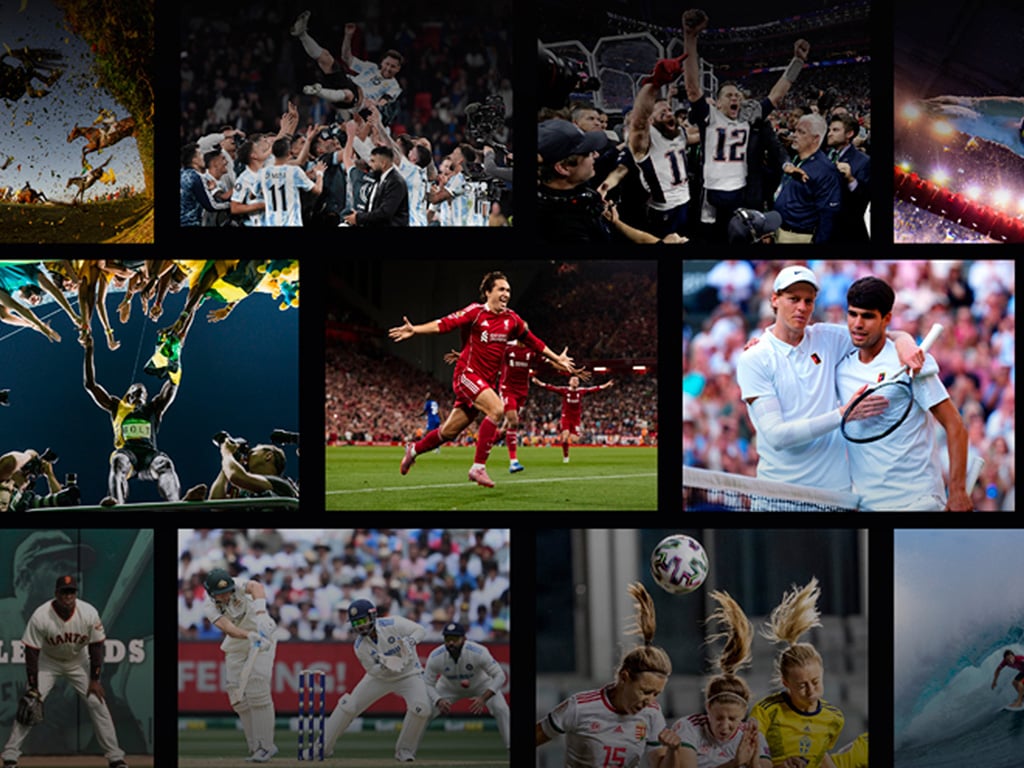
License Sports Images Tailored to Your Needs
Real-time editorial sports images across all major sports, including football, F1, tennis, and more, plus access to the largest editorial sports archives. Flexible licensing and fast support in Europe and worldwide.
Learn more